In Milan, decay does not breed crime: data disproves the broken windows theory
An investigation of 4,006 streets reveals that urban decorum and safety move independently — and that insecurity has its roots elsewhere.
In Milan, Urban Decorum and street Safety are unrelated: this is the finding from an analysis of 4,006 streets across the Lombard capital, dismantling the broken windows theory as applied to Milan. Nearly 800 streets live with visible decay — damaged buildings, graffiti, waste — yet record a Safety index of 72.1 out of 100, above the city median of 68.9. Another 774 streets, with perfectly average Urban Decorum, score just 31.4 on Safety: less than half the median. If the broken windows theory held true in Milan, these numbers should not exist.
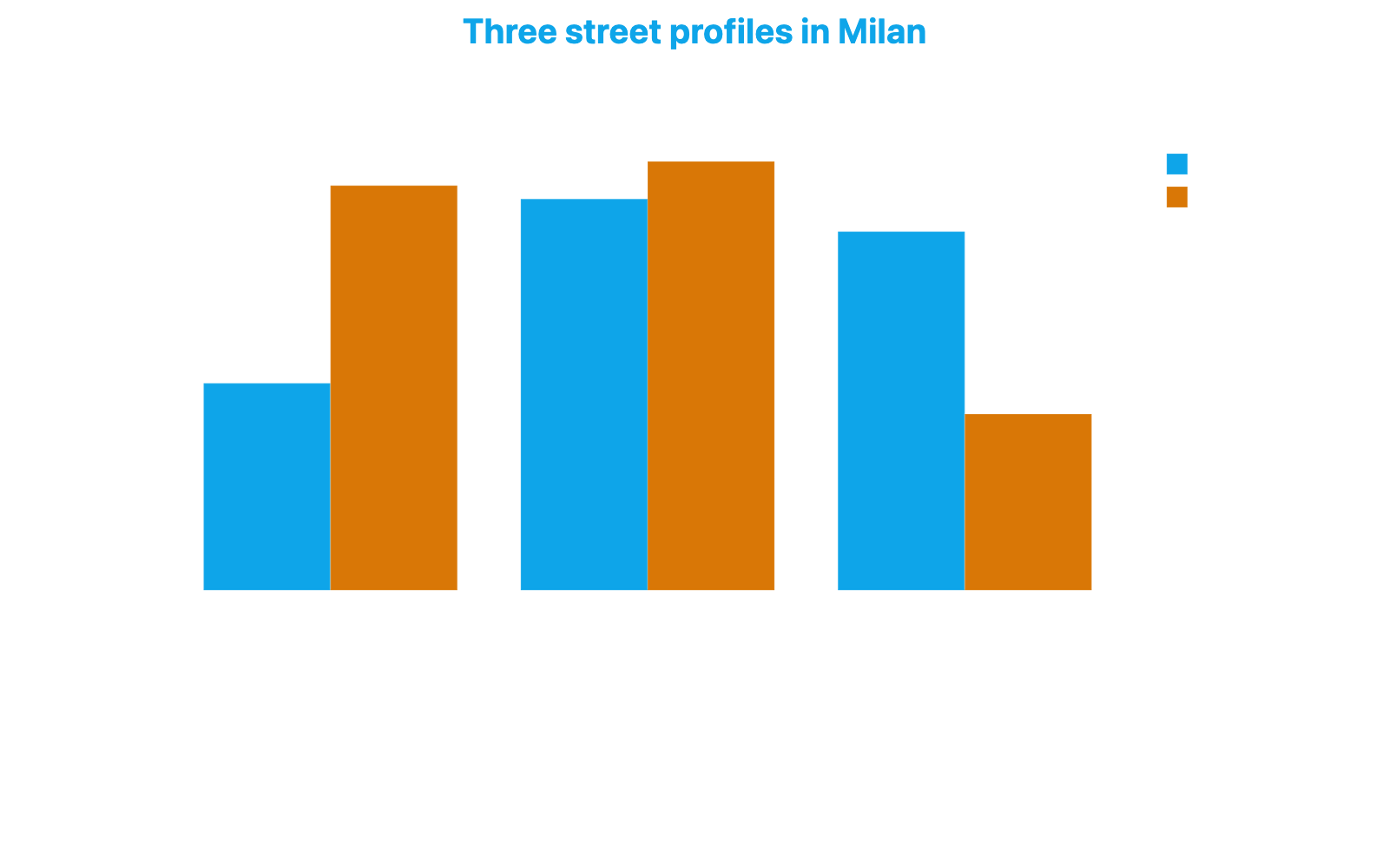
Two profiles that overturn conventional wisdom
The analysis identified three street profiles. The most striking is the first: 789 streets with an Urban Decorum index of 36.9 — well below the city's 25th percentile (50.8) and nearly half the median (64.2). These are the streets in the worst physical condition in Milan, and they remain so even when compared to their surroundings: the neighborhood comparison confirms that the decay is not a zone effect but a condition specific to these streets. Yet Safety stands at 72.1: above the city median and in line with the local norm. Decay is present; insecurity is not.
The opposite profile is equally telling. 774 streets with Urban Decorum at 63.9 — virtually at the city median — but a Safety index of 31.4, the lowest in the city. Nearly half the median, well below the 25th percentile (52.0), and below their own neighborhood norm. These streets have no peeling walls or accumulated waste, yet they concentrate a disproportionate share of crimes reported in the news. Insecurity is neither preceded nor accompanied by signs of physical decay.
The third profile — 2,443 streets, the bulk of the city — confirms the Milanese baseline: Urban Decorum at 69.7 (above the median) and Safety at 76.4 (close to the 75th percentile). Streets such as Via Luigi Mengoni near the Duomo, Via Bormio in Niguarda, and Via Valcava — the latter with an exceptionally high level of maintenance relative to its neighbors — show that streets where both values exceed the local norm are scattered across different neighborhoods, from the city center to the northern outskirts.
What is the correlation between decay and crime in Milan?
The raw correlation between Urban Decorum and Safety is close to zero: -0.075 on a scale where 1 would mean perfect correlation. When comparing neighboring streets — to isolate the effect of geographic position — that weak link disappears entirely and reverses sign, becoming statistically indistinguishable from chance. Nearly half of Milan's streets (46.4%) show Urban Decorum and Safety moving in opposite directions relative to their neighbors: a near-random distribution, consistent with two phenomena that do not interact.
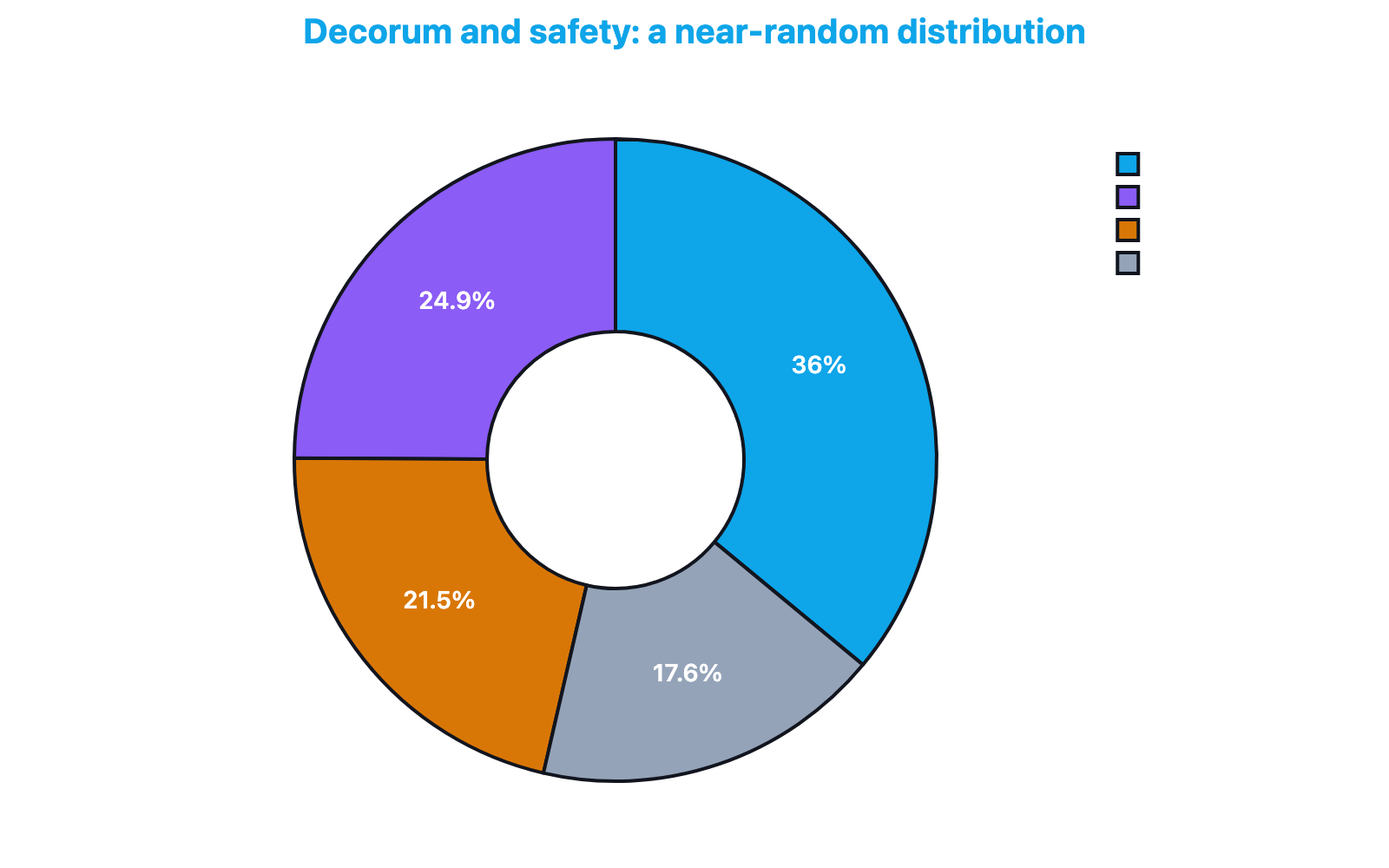
The very weak negative link observed in the raw data was a geographic illusion: central areas tend to have both higher Urban Decorum and more reported crimes — an effect of greater media attention on high-traffic areas, not a relationship between the two phenomena.
If not decay, what characterizes unsafe streets?
Cross-validation against 51 external signals overturns expectations. The three street profiles do not only separate Urban Decorum from Safety: they strongly discriminate by Attractiveness, Commercial Diversity, and Retail Offering density. But in the opposite direction from what one would expect.
The 774 streets with the worst Safety in Milan are not deserted or commercially declining. On the contrary: they have Commercial Diversity 18 points above their surrounding streets, Retail Offering density 10 points above, and property prices higher than the local norm. These are active, busy streets with better-rated shops than the local average.
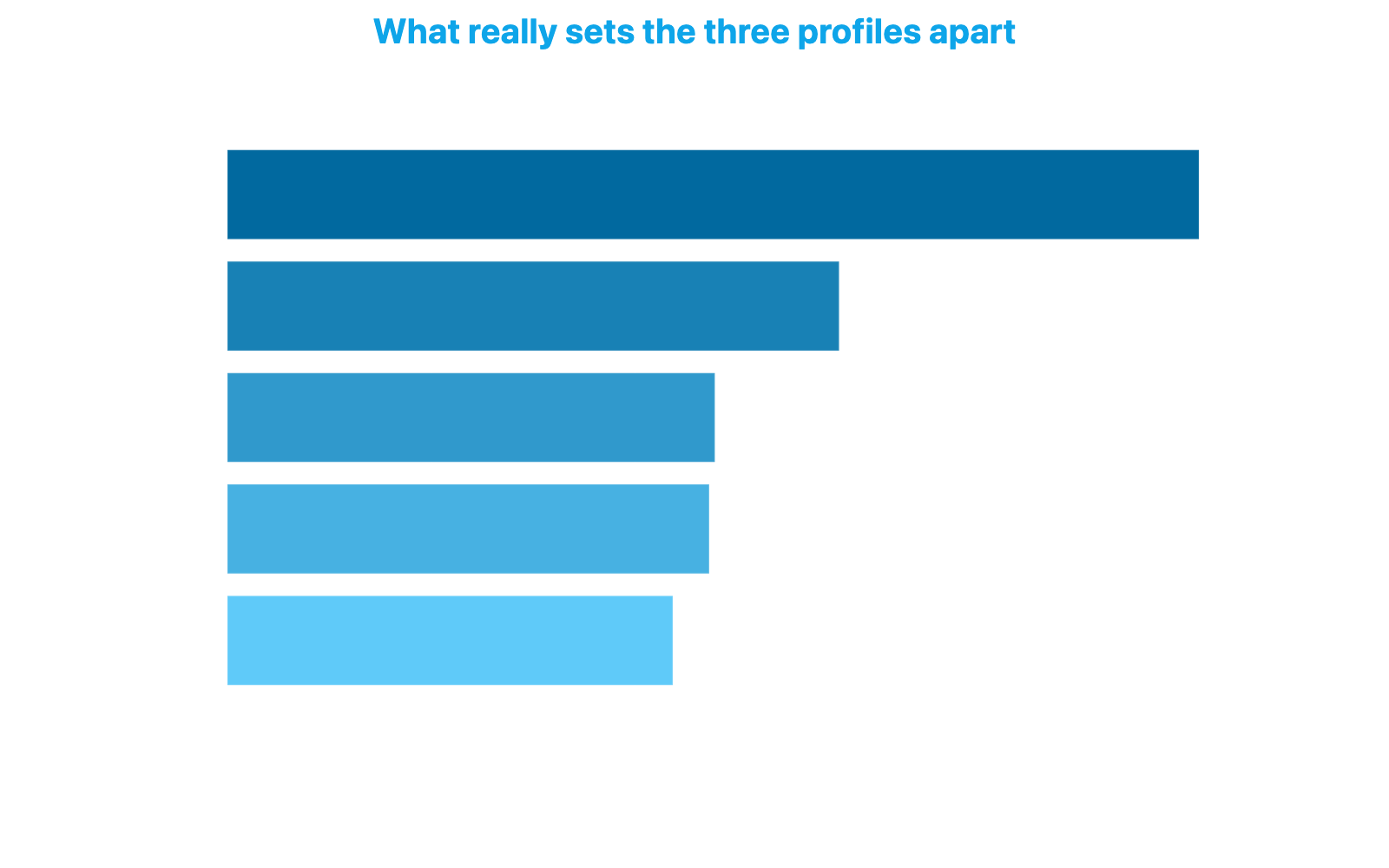
The paradox is stark: insecurity in Milan does not accompany decay or commercial desertification, but tends to concentrate where there is more activity, not less. The Safety analysis is based on 27 crime categories tracked street by street, all available in detail on the platform, including type, frequency, and trend. One possible explanation is that streets with high commercial concentration generate more foot traffic and therefore more incidents reported in the news — but the data measures association, not causation. What emerges clearly is that assessing a street's safety by its appearance or its commercial vitality is misleading in both cases: a gap between perception and fundamentals worth investigating on a case-by-case basis during due diligence.
Methodology: the investigation analyzed 4,006 streets in Milan by cross-referencing a composite Urban Decorum index (scale 0-100, based on automated street-level image analysis: degraded buildings, graffiti, waste, potholes, overgrown vegetation, sidewalk cracks) with a Safety index (scale 0-100, based on 27 crime categories from news monitoring). The correlation was calculated both on absolute values and by comparing neighboring streets, to isolate the effect of geographic position. The three street profiles were identified using statistical methods and verified for temporal stability. Cross-validation tested the profiles' ability to discriminate across 51 independent urban signals.
Frequently Asked Questions
Does the broken windows theory hold true in Milan?
No. The analysis of 4,006 streets in Milan shows that Urban Decorum and Safety move independently. The correlation between the two indices is virtually zero (-0.075) and vanishes entirely when comparing neighboring streets, isolating the effect of geographic position. Nearly 800 streets with visible decay have Safety scores above the city median.
Which streets in Milan are the least safe?
The 774 streets with the lowest Safety index (31.4 out of 100) are not the most degraded ones, but those with average Urban Decorum and a commercial concentration above the norm. Insecurity is not preceded by signs of physical decay: these streets have more shops, greater Commercial Diversity, and higher property prices than their surrounding streets.
Does urban decay increase crime in Milan?
No, the data contradicts this. The 789 streets with the worst Urban Decorum in Milan (index 36.9 out of 100) record a Safety index of 72.1, above the city median of 68.9. Visual decay — graffiti, damaged buildings, waste — does not translate into a higher incidence of crime.
How is street Safety measured in Milan?
The Safety index (scale 0-100) is based on 27 crime categories tracked street by street through systematic news monitoring. Each street is analyzed by crime type, frequency, and trend, with data available in detail on the platform.
What characterizes the most unsafe streets in Milan?
Cross-validation against 51 urban signals shows that unsafe streets are neither the most degraded nor those with the least commercial activity. On the contrary, they tend to have greater Commercial Diversity, more shops, and higher property prices than their surrounding streets. Insecurity accompanies a concentration of activity, not its absence — a finding that challenges both the broken windows theory and the idea that commercial vitality protects against crime.