Navigli, Isola, Città Studi: Three Milan Neighborhoods Compared on Rents, Safety and Livability
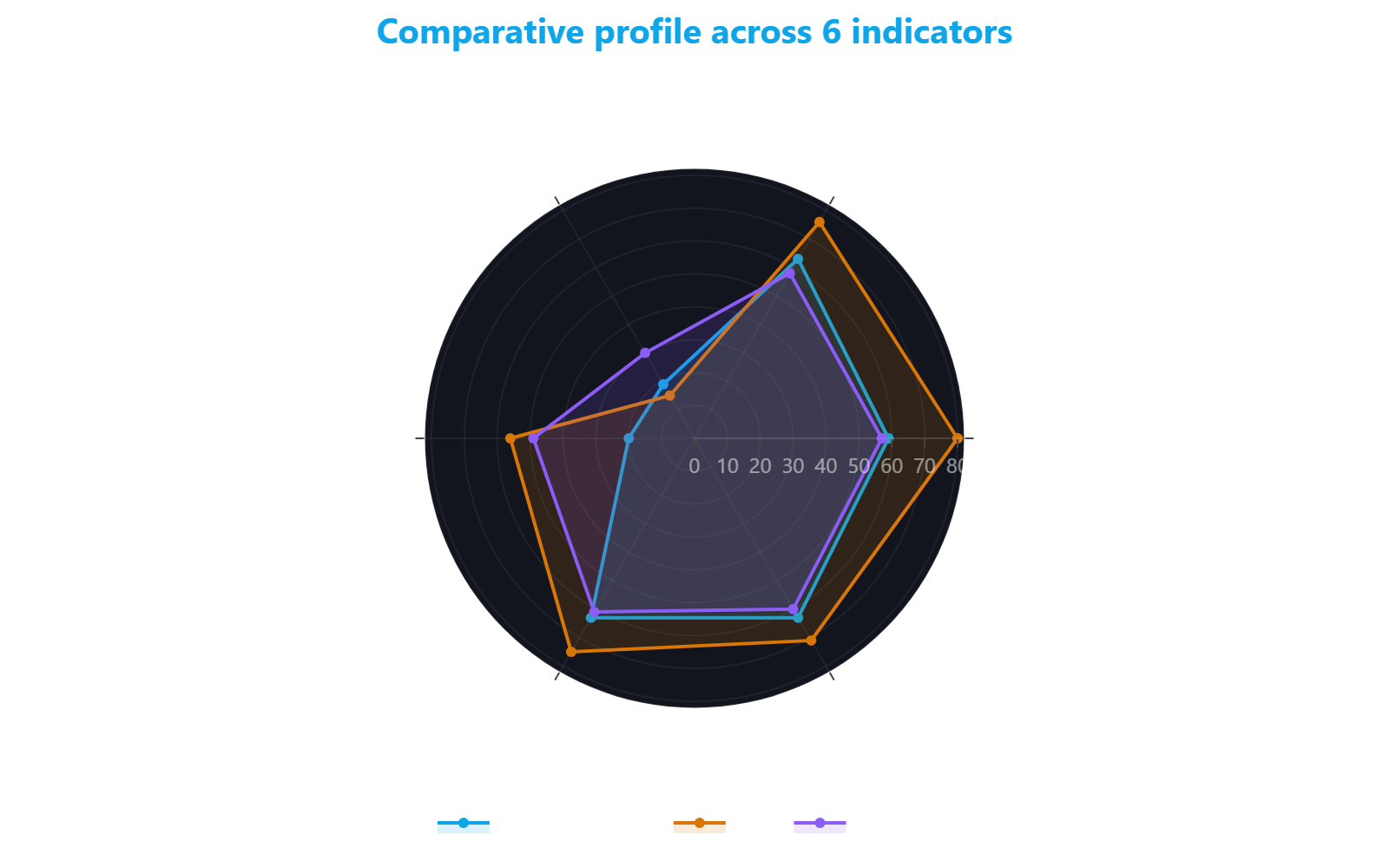
An analysis across six indicators compares three central neighborhoods — revealing three distinct urban models, each with its own cracks.
The comparison of Navigli, Isola and Città Studi across rental prices, safety and livability paints a mixed picture. Isola is the most expensive, Navigli scores worst on livability, Città Studi is the safest of the three — yet none truly shines. An analysis covering 144 Milan neighborhoods reveals three areas the market treats as central and desirable, but whose fundamentals tell very different stories.
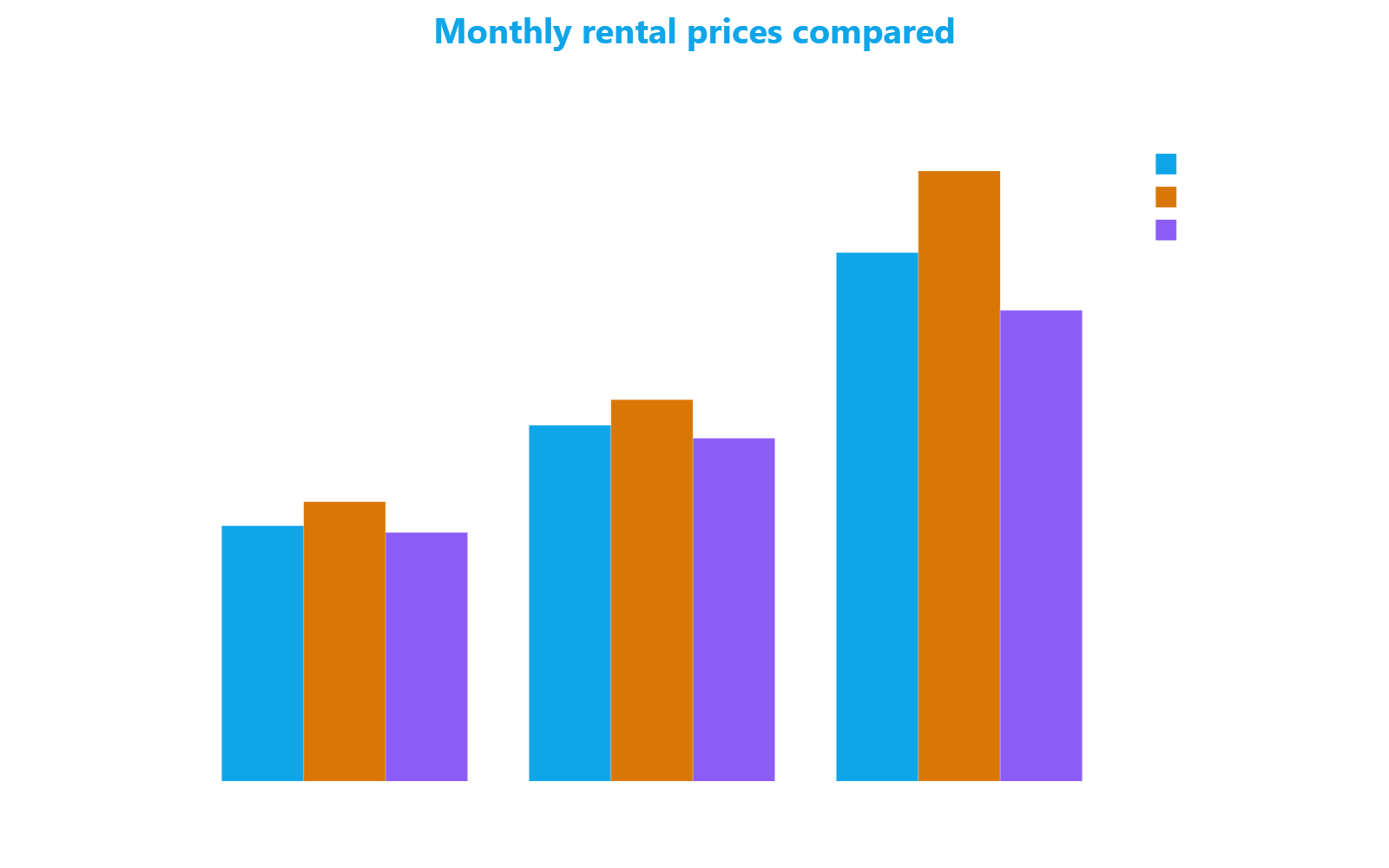
Rents: Isola pulls ahead, Città Studi stays affordable
The widest gap is on two-bedroom apartments. Isola reaches EUR 2,160 per month — a rent that places it 35th out of 144 neighborhoods, well above the citywide median of EUR 1,532. Navigli stops at EUR 1,871, Città Studi at EUR 1,667: nearly EUR 500 per month separates the most expensive from the most affordable zone, a 30% spread.
For studios the gap narrows. Isola asks EUR 989 per month versus EUR 880 in Città Studi — just over a hundred euros difference, 12%. Navigli sits in between at EUR 904, in line with the citywide median of EUR 851. The signal is clear: Isola's premium widens with apartment size, a relevant data point for anyone evaluating rental yields across different unit types. Rents are calculated based on listings active on real estate listing platforms during the reference period.
How much does a two-bedroom apartment cost to rent in Navigli, Isola and Città Studi?
In Milan, in April 2026, a two-bedroom rental in Isola costs approximately EUR 2,160 per month, in Navigli EUR 1,871 and in Città Studi EUR 1,667. The spread between the most expensive and most affordable zone is 30%, equivalent to nearly EUR 500 per month.
Safety: all declining, but from different starting points
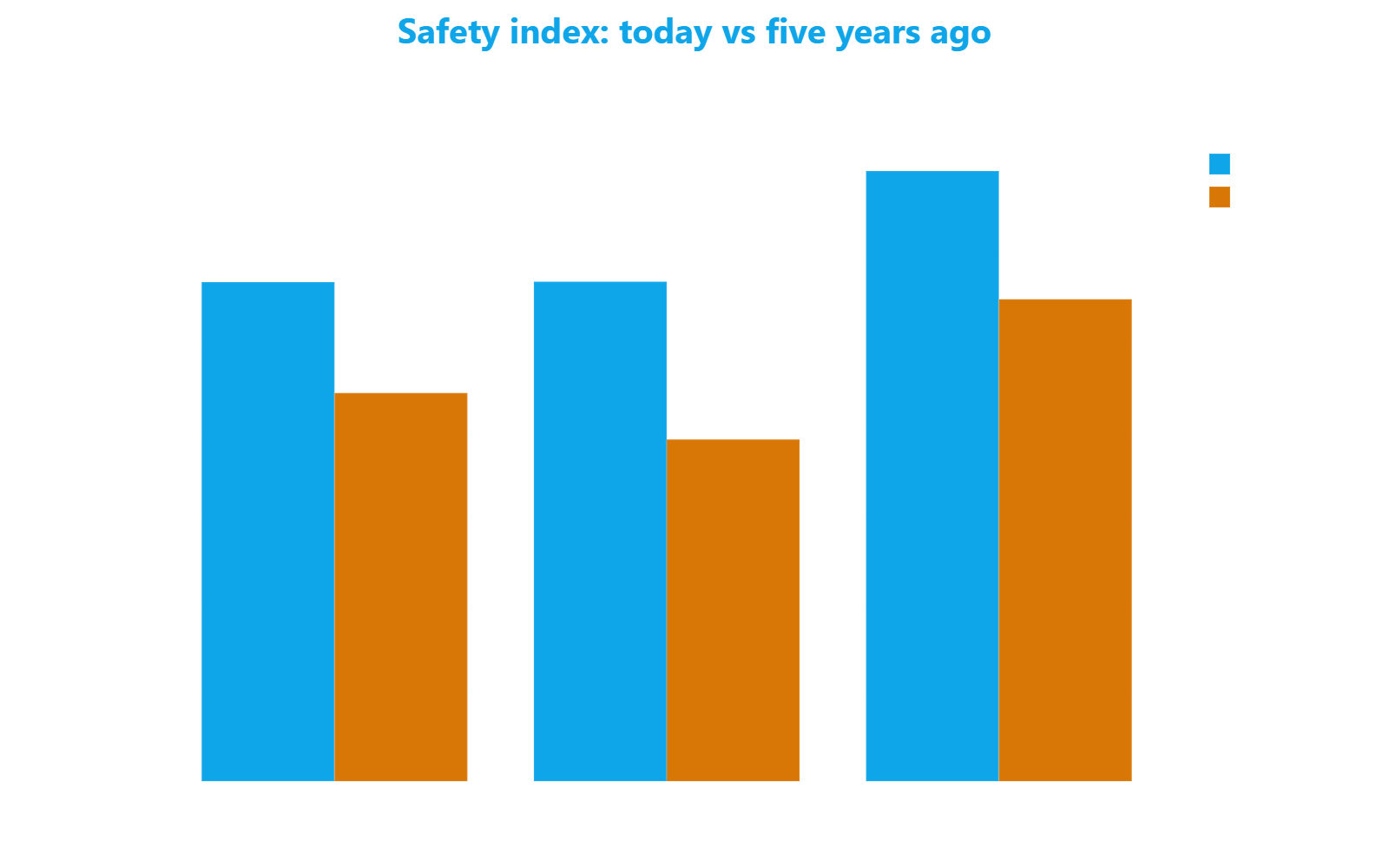
This is the dimension that unites all three neighborhoods — and the one where historical data tells the most significant story. All three sit below the citywide median of 68.76 points, all three are declining. But their trajectories diverge.
Five years ago Navigli and Isola had nearly identical safety scores: 57.04 and 57.09 points. Today Isola has dropped to 39.05 — an 18-point plunge that places it 122nd out of 144, in the bottom 15% citywide. Navigli has lost less, landing at 44.38 (116th), but the decline remains significant. Città Studi started from a stronger position — 69.74 points, above the median — and now sits at 55.08: it has lost ground but remains the best of the three, with nearly 16 points over Isola. The safety analysis is based on 27 crime categories tracked street by street, derived from crime reporting data — all available in detail on the platform, with type, frequency and trend.
The data raises questions about the sustainability of Isola's rents: the neighborhood with the highest prices is also the one with the lowest safety score of the three, and the worst trajectory. A gap worth investigating on a case-by-case basis.
Which is the safest neighborhood among Navigli, Isola and Città Studi?
Città Studi is the safest of the three, with a safety index of 55.08 out of 100 — nearly 16 points above Isola (39.05) and over 10 above Navigli (44.38). However, all three neighborhoods sit below the citywide median of 68.76 points and have recorded a decline over the past five years.
Urban Livability and Attractiveness: surprises in the details
Navigli pays the highest price on Urban Livability — an index that integrates services, green spaces, soft mobility and quiet — with 45.55 points (115th out of 144, bottom 20%). Its Urban Decorum score, based on automated street-level image analysis, stands at 48.27 points versus a citywide average of 61.32: the lowest of the three neighborhoods, and down from 58.71 five years ago. Isola, by contrast, scores 63.88 on Urban Decorum — above average — and an overall Urban Livability of 49.02, in the citywide average.
On Attractiveness — an index combining Aesthetics, culture, dining and traditional retail, built from geospatial surveys of commercial activities — Isola leads with 44.28 points (top 25%), driven by an Aesthetics score of 43.33 versus a citywide average of 33.33. But the detail tells a less obvious story: Navigli has the highest restaurant density of the three, with an index of 3.55 — triple the citywide average of 1.13 — and the highest number of Historic Shops (0.94 versus an average of 0.55). Yet overall Attractiveness is only average: Urban Decorum and maintenance drag it down. Città Studi, with the highest Green Density (75.61 versus an average of 71.03) and a sparser dining scene (1.01), is the most residential neighborhood of the three.
Is Navigli a good neighborhood to live in Milan?
Navigli offers the richest Retail Offering and dining scene among the three neighborhoods analyzed, with a restaurant density triple the citywide average. However, Urban Livability is penalized by an Urban Decorum score of 48.27 points, well below the average of 61.32, and an overall livability score of 45.55 out of 100 placing it in the bottom 20% of the city.
Three profiles, no winner
The comparison yields three distinct identities. Isola is the most expensive and most attractive, but pays the highest price on safety. Navigli has the densest and most historic Retail Offering, but the lowest Urban Livability and eroding Urban Decorum. Città Studi is the most balanced: no standout rankings, but none of the critical weaknesses of the other two — and affordable rents, worth exploring on a case-by-case basis in a market where value for money matters.
Methodology: direct comparison of 3 neighborhoods across 6 metrics. Period: April 2026. Rankings indicate position within the citywide distribution of 144 neighborhoods. Neighborhood values are the average of their component streets. Data from public and proprietary sources, covering 4,006 streets, 105 metrics and monthly history since January 2020. Rental prices derived from real estate listing platforms; safety indices from 27 crime categories tracked via crime reporting data; Urban Decorum from automated street-level image analysis; Attractiveness from geospatial surveys of commercial activities.
Frequently Asked Questions
How much does a studio apartment cost to rent in Isola, Navigli and Città Studi?
In April 2026, a studio in Isola costs EUR 989 per month, in Navigli EUR 904 and in Città Studi EUR 880. The difference between the most expensive and most affordable zone is approximately EUR 110 per month, or 12%. Navigli sits in line with the citywide median of EUR 851.
How has safety changed in Isola over the past five years?
Isola has recorded the steepest decline among the three neighborhoods: the safety index dropped from 57.09 to 39.05 points, a loss of 18 points in five years. Today the neighborhood ranks 122nd out of 144, in the bottom 15% of the city for safety, despite remaining among the zones with the highest rental prices.
Which neighborhood has the most green space among Navigli, Isola and Città Studi?
Città Studi has the highest Green Density of the three, with a score of 75.61 versus a citywide average of 71.03. It is also the most residential neighborhood in the comparison, with a sparser dining scene and more affordable rents than Isola and Navigli.
Does Navigli have more restaurants than Isola and Città Studi?
Yes, Navigli has the highest restaurant density of the three neighborhoods analyzed, with an index of 3.55 — triple the citywide average of 1.13. Navigli also has the highest number of Historic Shops (0.94 versus an average of 0.55). Despite this, overall Attractiveness remains average due to the low Urban Decorum score.
Is Città Studi a better value than Isola and Navigli?
Città Studi is the most balanced neighborhood in the comparison: a two-bedroom apartment costs EUR 1,667 per month (nearly EUR 500 less than Isola), safety is the highest of the three at 55.08 points, and Green Density is above the citywide average. It has no standout rankings in Attractiveness or Nightlife, but avoids the critical weaknesses of the other two neighborhoods.