Milan's 10 Most Family-Friendly Neighborhoods, March 2026: The Ranking That Rewards Consistency
School access, safety, green spaces, and social services: an analysis of 144 neighborhoods reveals where Milan works best for families with children
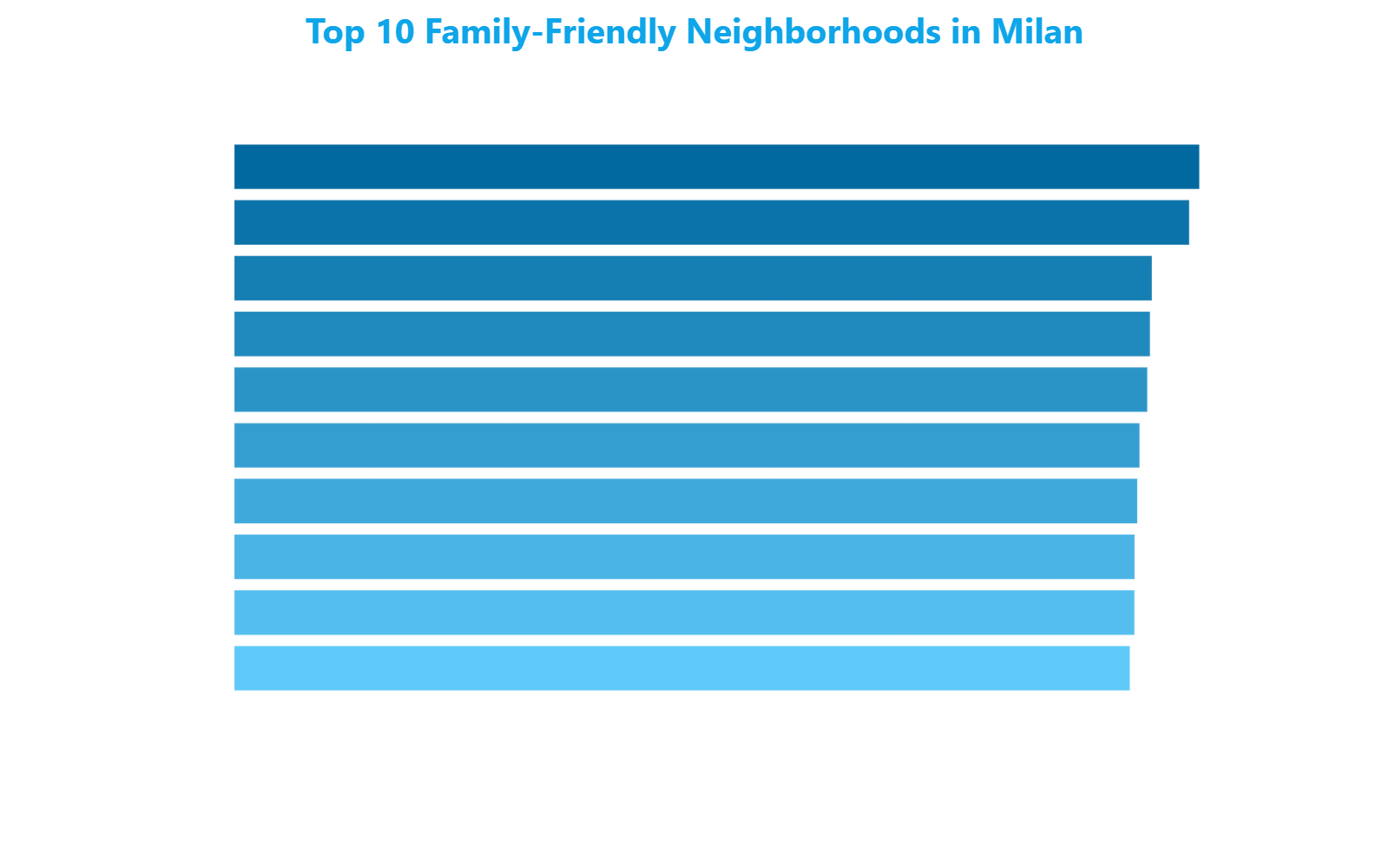
Which are the best neighborhoods for families in Milan in 2026? The Family Friendly Index, calculated across 144 neighborhoods and over 4,000 streets, paints a picture that diverges sharply from the city's real estate prestige map. Pagano leads the ranking with 71.39 points — more than 15 points above the city median of 55.89. This is no surprise: the neighborhood has held the top spot for two consecutive years and was already in the top 5 five years ago. The real story lies elsewhere.
The Podium: Pagano, Arena, and a Lasting Overtake
The Family Friendly Index combines six dimensions — School Access (40% weight), Social Infrastructure (20%), Safety (20%), parks and green spaces (10%), Healthcare Services (5%), and Traffic Flow (5%) — rewarding neighborhoods that perform well across all of them simultaneously. A large park or a nearby school is not enough: the entire urban fabric must work as a whole.
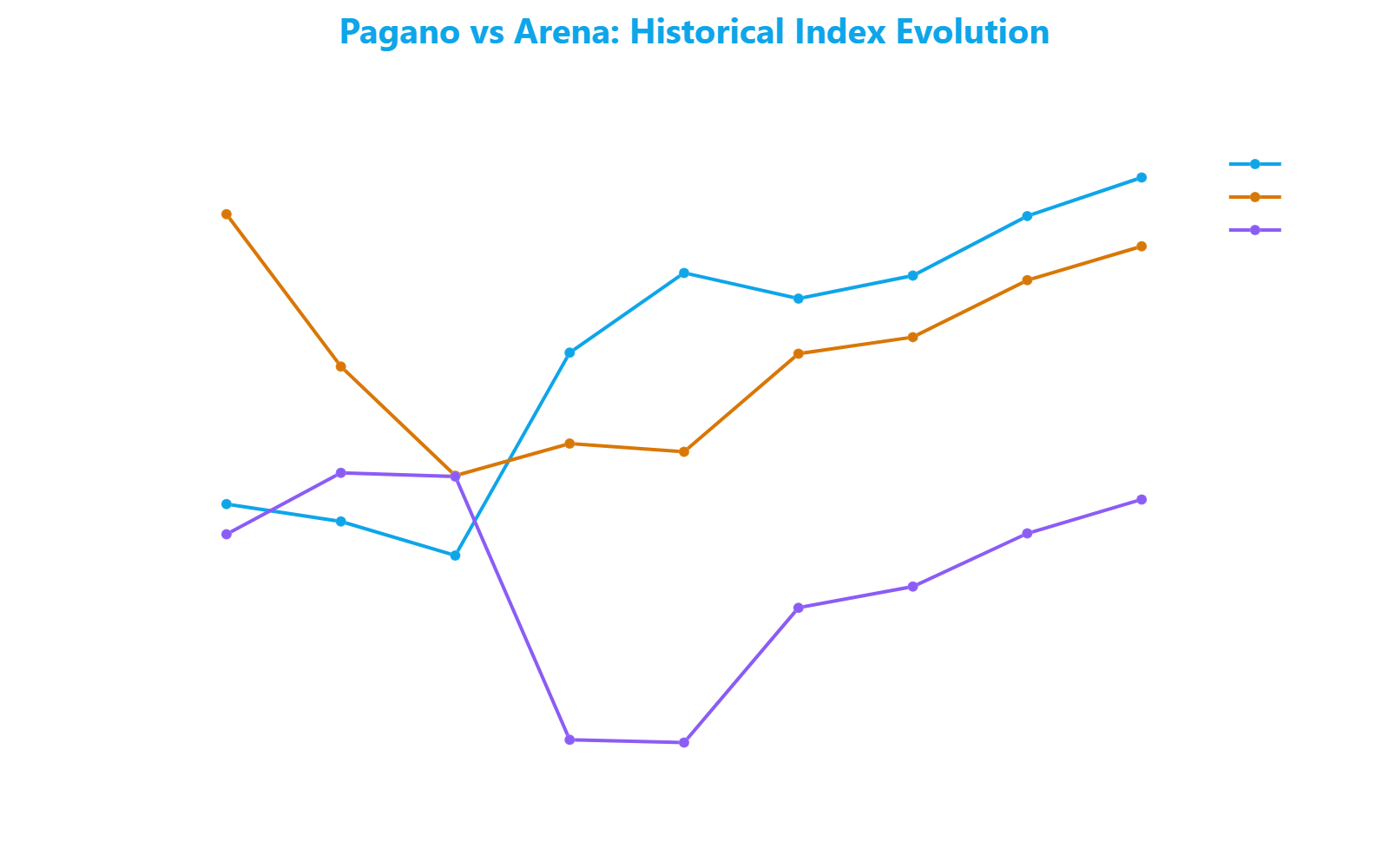
Pagano, at 71.39 points, dominates this logic. But the most interesting data point is its relationship with Arena (70.64 points, second place): five years ago, the positions were reversed. Arena topped the ranking at 70.99 points while Pagano sat fourth. The overtake happened three years ago and has held ever since. Two neighborhoods separated by less than one point, with trajectories that crossed and stabilized.
In third place sits Roserio, at 67.88 points — a neighborhood rarely featured in Milan's most cited real estate rankings. Its path has been less linear: it was second five years ago, slipped to ninth one year ago, then climbed back decisively. A different profile from the granite-like stability of the top two.
How stable is Milan's top 3 family-friendly ranking?
Pagano and Arena have held the top two positions for over two consecutive years, separated by less than one point (71.39 vs 70.64). Monthly historical data since 2020, based on 105 metrics per neighborhood, shows that the top of this ranking is among the most stable across the entire urban indicator system analyzed.
The Climbers: Cadore and Ca Granda
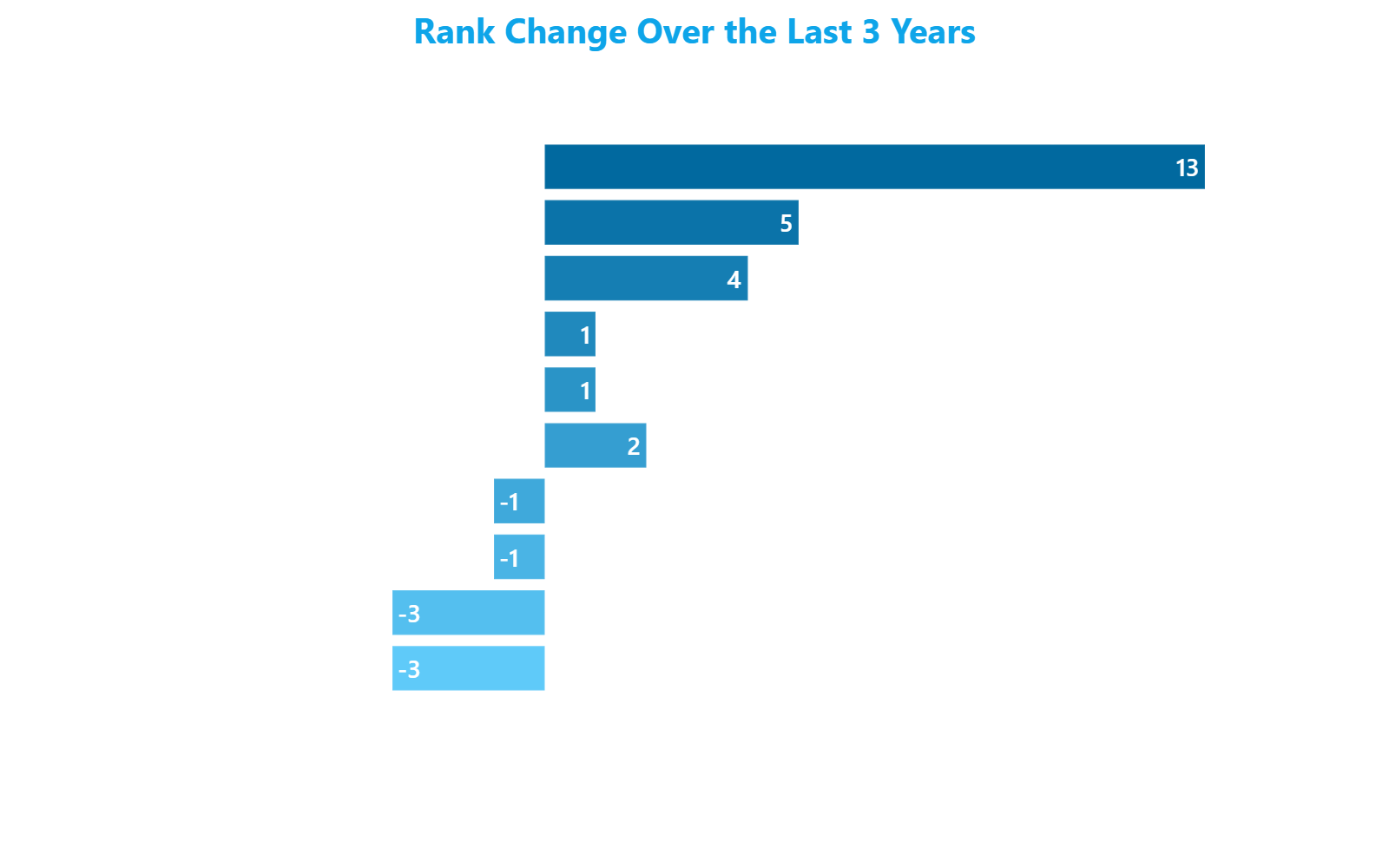
While the podium tells a story of consolidated positions, the lower half of the top 10 reveals movement. Cadore (67.54 points, fifth place) was ranked 18th three years ago. In 36 months it gained 13 positions, the steepest climb in the group. A neighborhood that progressively improved its combination of School Access and Safety — measured through georeferenced crime data — until it broke into the elite.
Ca Granda, closing the ranking in tenth place with 66.25 points, tells a similar story: it was 22nd five years ago. The climb was gradual and steady, with no sudden jumps — the kind of trajectory that suggests structural improvement in the urban fabric, not a temporary effect.
The Group Pattern: Tight Spacing and Notable Absences
One data point runs through the entire top 10: the gap between first and tenth is just 5.14 points. A narrow margin in a ranking where the city average (55.32) and the minimum (26.98) are nearly 30 points apart. The top tier is an exclusive, homogeneous club.
Why don't Brera and CityLife appear among family-friendly neighborhoods?
The index weights School Access at 40% of the total score. Neighborhoods with high prices and strong commercial Attractiveness can be penalized if school density is low or Social Infrastructure is scarce. The family-friendly ranking measures everyday functionality for families, not market positioning.
Equally telling is who is missing. Neighborhoods like Brera, CityLife, or Porta Nuova — at the top of Real Estate Value or Attractiveness rankings — do not appear. The family-friendly index weights School Access at 40%: a neighborhood can have sky-high prices and vibrant Nightlife, but if schools are distant or Social Infrastructure is lacking, the ranking is unforgiving.
Quadronno-Crocetta (sixth, 66.97 points) and QT8 (seventh, 66.80) confirm the pattern: residential neighborhoods with a dense, established service network. QT8 was third one year ago and has dropped a few positions, but remains firmly in the upper tier. Lanza (eighth, 66.60) has a more irregular path — it was second five years ago at 69.14 points, dropped to 13th, and is now climbing back. Primaticcio (ninth, 66.59 points) completes the picture with a stable profile in the 5-14 range over the last five years.
The ranking reveals a family-friendly Milan that does not overlap with prestige real estate Milan. It is a different map, where everyday services matter more than market positioning — a finding that, from a residential perspective, shows which neighborhoods truly work for the people who live there every day.
Methodology: ranking based on the Family Friendly Index, a weighted average of six components (School Access 40%, Social Infrastructure 20%, Safety 20%, parks and green spaces 10%, Healthcare Services 5%, Traffic Flow 5%), calculated across 144 Milan neighborhoods. Period: March 2026. Neighborhood values are the average of the streets within them. School Access is calculated from geospatial surveys of facilities and institutions within the radius of the streets analyzed. Safety components integrate georeferenced crime data. Data from public and proprietary sources, covering 4,006 streets, 105 metrics, and monthly historical records since January 2020.
FAQ
What are the best neighborhoods for families in Milan in 2026?
According to the Family Friendly Index calculated across 144 neighborhoods, the top 3 are Pagano (71.39 points), Arena (70.64), and Roserio (67.88). The index combines six dimensions including School Access, Safety, green spaces, and Social Infrastructure, weighted by relevance to everyday family life.
How is the family-friendly index for Milan neighborhoods calculated?
The index is a weighted average of six components: School Access (40%), Social Infrastructure (20%), Safety (20%), parks and green spaces (10%), Healthcare Services (5%), and Traffic Flow (5%). Each neighborhood's value is the average of its constituent streets, with data collected across 4,006 streets and 105 metrics, and monthly historical records since January 2020.
Why don't expensive neighborhoods like Brera and CityLife make the ranking?
The family-friendly index weights School Access at 40%. Neighborhoods with high Real Estate Value can be penalized if school density is low or Social Infrastructure is insufficient. The ranking measures everyday quality of life for families, not prestige or property market value.
Which neighborhood has climbed the most in the family-friendly ranking?
Cadore recorded the steepest climb: from 18th place three years ago to its current fifth position, gaining 13 places in 36 months. The improvement is linked to a progressive combination of greater School Access and Safety.
How close are the top 10 neighborhoods to each other?
The gap between first (Pagano, 71.39 points) and tenth (Ca Granda, 66.25) is just 5.14 points. A very narrow margin compared to the gap between the city average (55.32) and the lowest-scoring neighborhood (26.98), which exceeds 28 points.