Scalo Farini: where Milan's largest urban regeneration stands
Scalo Farini, where it stands: the Agenti Climatici masterplan, UniCredit's new HQ, the Brera campus, the park and the student housing. Construction progress and changes, updated to 2026.
Updated to 2026
Scalo Farini is the largest of Milan's seven disused railway yards and the heart of the city's most extensive urban regeneration operation. But how far along is it, really? The "Agenti Climatici" masterplan was selected in 2019, yet the transformation has only recently gathered pace: since January 2026 the major land remediation and demolition works have begun, while the individual projects — from the Accademia di Brera campus to UniCredit's new headquarters, from the park to the housing — are proceeding at very different speeds, amid delays and changes. Here you will find first the project's vision and then the updated status of the works.
The future of Scalo Farini
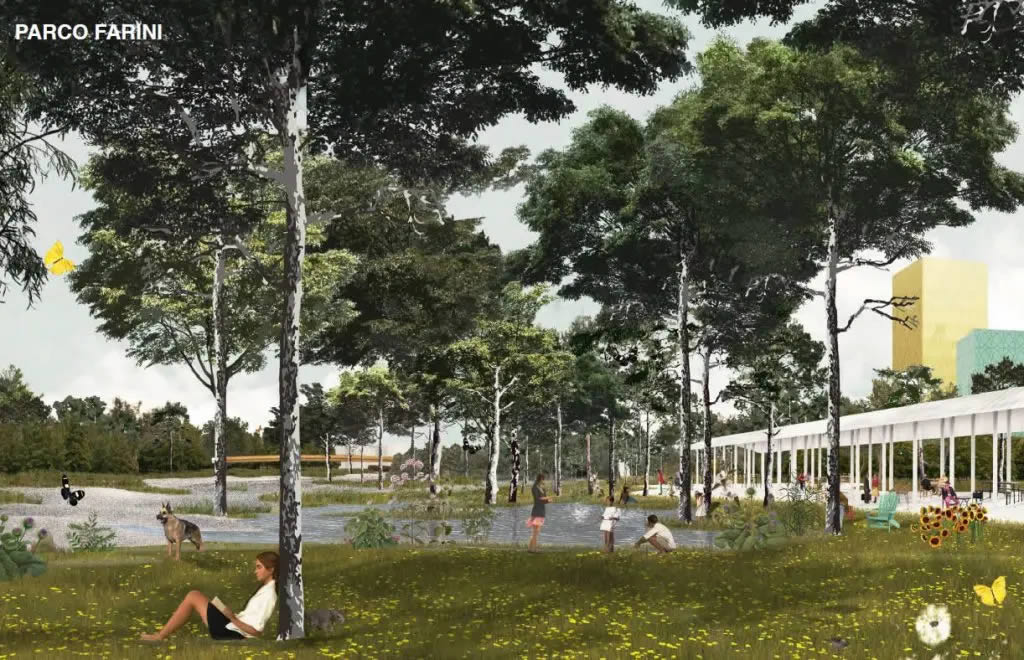 The vision of the Scalo Farini regeneration
What will the new district rising around Scalo Farini look like? The regeneration of our city's seven disused railway yards (Farini, of course, but also Porta Romana, Porta Genova, Greco-Breda, Lambrate, Rogoredo, San Cristoforo) is an operation covering 1,250,000 sqm. Scalo Farini undoubtedly plays the leading role. Farini will be the main project both in size (on its own it spans 468,000 sqm) and in importance.
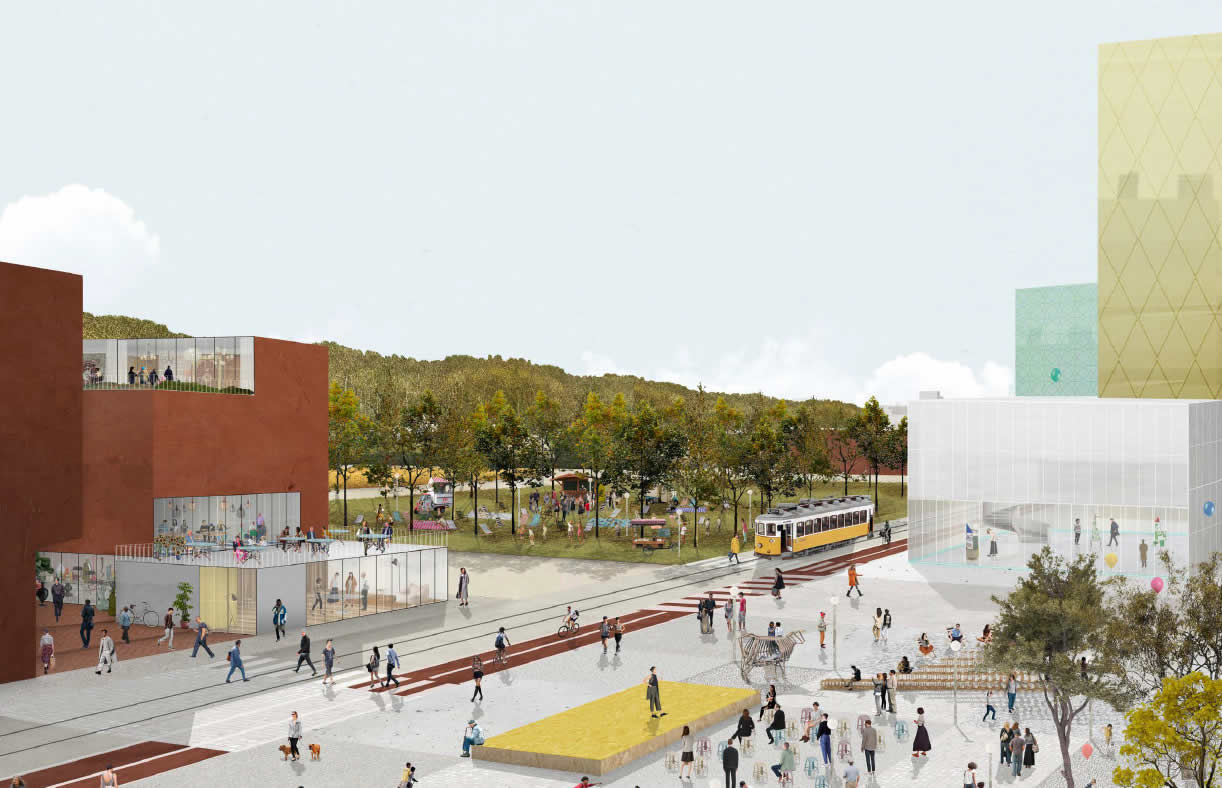 The new Farini district seen from the yard
As many know, the "Agenti Climatici" project (by the OMA studio and Laboratorio Permanente) won the 2019 competition for the urban regeneration of the Farini and San Cristoforo yards. The tender was renamed — not by chance — the "Concorso Farini". The programme agreement was signed by the City of Milan, the Lombardy Region, FSI and Coima Sgr. Let us go into detail. The masterplan flies the banners of sustainability and greenery, ever more topical themes. Scalo Farini is in fact set to become home to a large park of about 300,000 sqm. A green lung serving our district and the whole city. The winning project has, indeed, its core in a large linear forest designed to cool the hot winds coming from the south-west (an "air Limpidarium") and to purify the air.
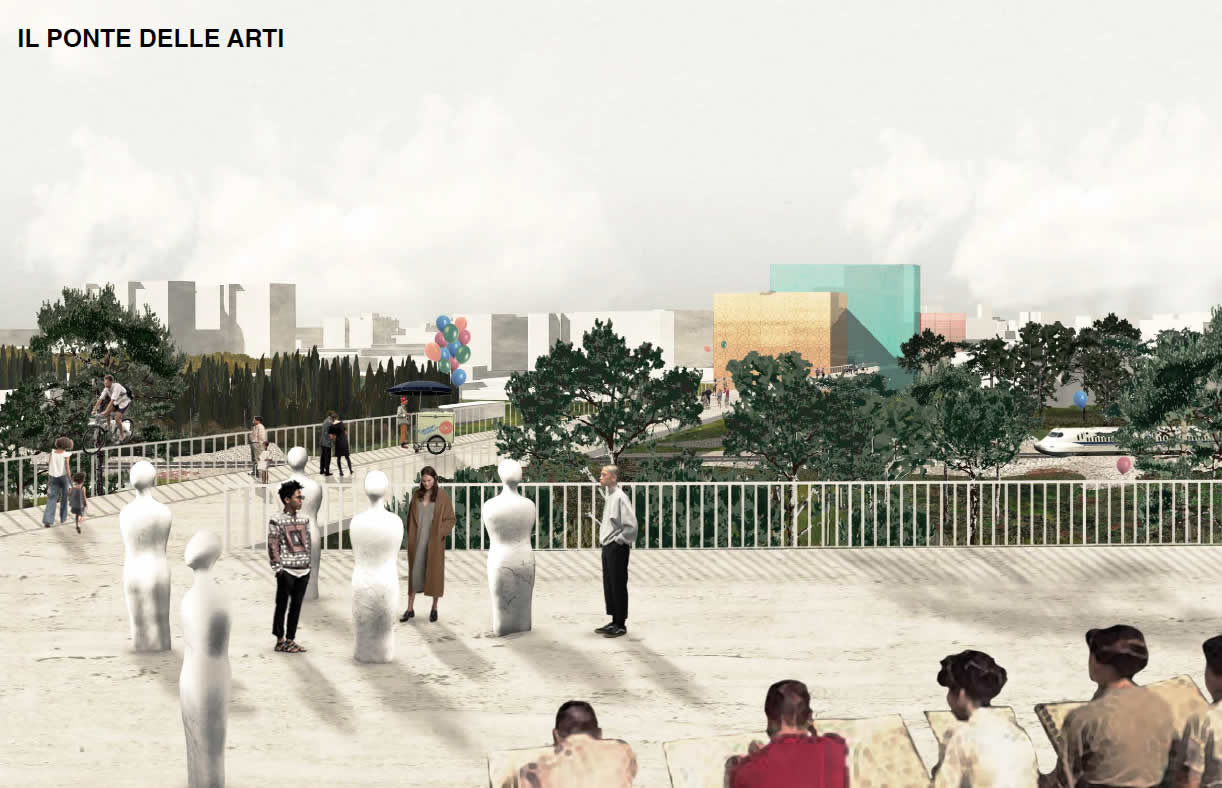 One of the two bridges planned in the Masterplan
The winners of the Concorso Farini
Winning the Concorso Farini with the "Agenti Climatici" project were, as mentioned, OMA and Laboratorio Permanente, led by Nicola Russi and Angelica Sylos Labini. OMA is a renowned Dutch architecture firm based in Rotterdam. These players were joined by a multidisciplinary team of experts. To name a few: Philippe Rahm architects, for meteorological architecture; Vogt Landscape Architects, for landscape design; Ezio Micelli and the cultural association Temporiuso; and the firms Arcadis and Net Engineering, for issues concerning urban policies and the themes of sustainability and transport.
The choice of "Agenti Climatici" was the result of a careful evaluation by a jury of experts, chaired by Dominique Perrault. The announcement took place at a ceremony attended by the then Councillor for Urban Planning Pierfrancesco Maran. Alongside Maran were the CEO of Coima Sgr Manfredi Catella — one of the protagonists of the Scalo Farini transformation — and the vice-president of FS Sistemi Urbani, Carlo De Vito.
OMA and Manfredi Catella speak
OMA and Laboratorio Permanente, both obviously present at the ceremony, commented as follows: "The two new parks are conceived as ecological filters capable of purifying the urban ecosystem. In Farini, an urban grid of equipped greenery and public spaces defines relationships of continuity with the surrounding context. Farini makes itself resilient to the city's economic development by borrowing its settlement principles. San Cristoforo becomes a common ground on the metropolitan scale for the human and non-human community".
According to Manfredi Catella, CEO of Coima Sgr, "the railway-yard system made up of Garibaldi Repubblica, now regenerated into the Porta Nuova district, and the Valtellina-Farini yard, represents one of the most important urban redevelopments in the world. It is comparable to Canary Wharf in London and La Défense in Paris. We are ready to launch the development of the yard's first phase, which will connect Porta Nuova to Farini along a strategic city axis that could continue through Bovisa all the way to the former Expo areas".
Scalo Farini and Agenti Climatici
The winning project reveals an environmentalist soul. Agenti Climatici imagines two parks aimed at mitigating the polluting effects produced by the city. It modulates the interventions taking into account that the two yards (Scalo Farini and Scalo San Cristoforo) sit respectively in a dry and a water-rich area. For San Cristoforo, water will be the protagonist, with the creation of an enormous phytodepuration basin, largely swimmable. For Farini, the idea is a natural "filter" role for our city's air.
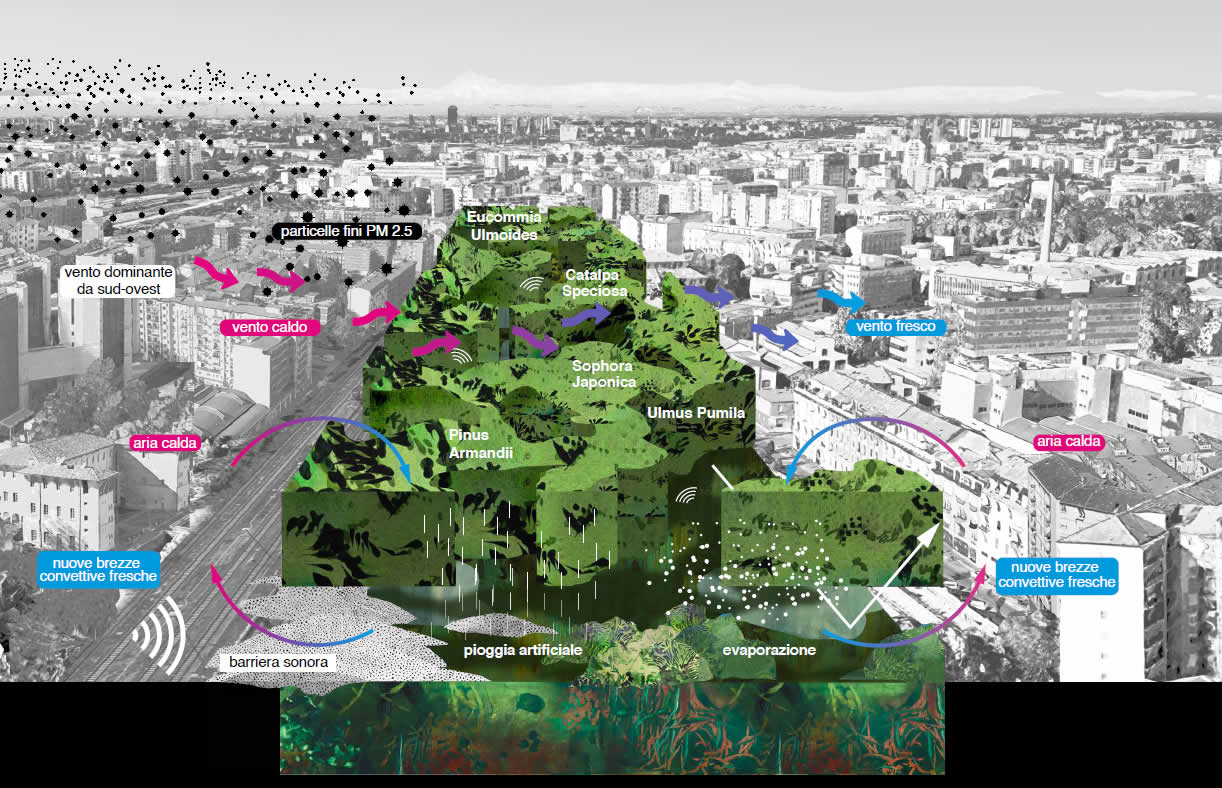 An ecological filter for the city
The transformation of Scalo Farini will reshape a large portion of Milan. It will do so with a different philosophy from the approach adopted for the rebirth of Porta Nuova. "There is nothing iconic in the project", the competition winners point out, "because the city does not only need exceptionality. The city needs neighbourhoods to live in". Agenti Climatici thus aims to give Milan a livable, enjoyable green island. A forest able to cool the hot south-westerly winds and filter toxic particles from the air. At the same time, however, OMA envisaged that the green/ecological intervention of the area should be only the first piece of a broader relaunch. A social and economic boost for the whole district. Farini will also be a meeting place returned to the community. In the yard** area, services and spaces for citizens will flourish, not least a child-friendly square.
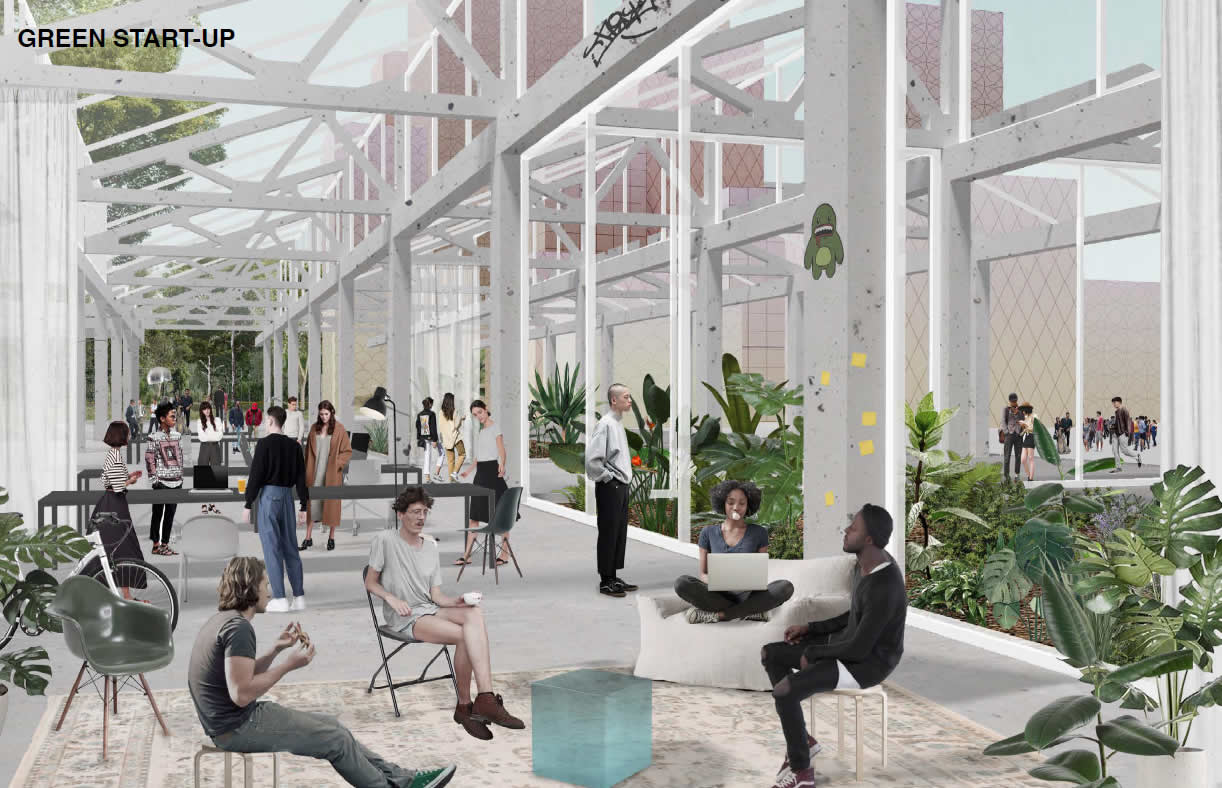 Scalo Farini, urban fabric
Scalo Farini, the public-city system
Let us turn to the various types of intervention that in the coming years will bring our district to life. First of all, the Masterplan puts into practice the principle of anti-zoning. There will be, that is, no separate functional areas (commercial, residential, public, etc.). The inspiration came from the city's other neighbourhoods that over the years developed "naturally". In Farini the goal is in fact to erase the boundary between the "new" district and the existing city. To strategically integrate the different functions, keeping fundamental drivers in mind: the interpenetration of public and private spaces first of all; then the centrality of the street, the social function of gathering places, and so on. Another key feature of the intervention will be the high reuse of pre-existing structures. For OMA, Farini will be "a district devoted to multifunctionality, thanks to the coexistence of traditional and innovative activities and the presence of private activities with a strong impact on the community".
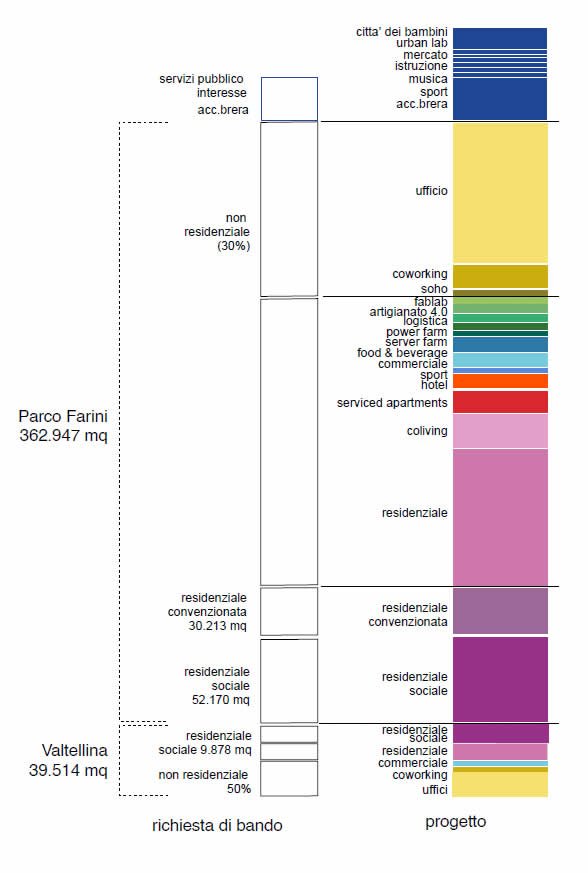 Tender request and Masterplan
Accademia di Brera
A symbol of all this will be the new home of the Accademia di Brera, which will soon begin the redevelopment of about 15,000 sqm inside Scalo Farini. The Milanese academy will handle the creation of innovative spaces to house the cutting-edge Campus of the Arts. The Brera in Scalo Farini project is very dear to the Academy's President, Livia Pomodoro. She stated that the Via Valtellina campus "is almost at the finish line". She added that "We hope students can enter as early as this academic year, but that also depends on the bureaucracy involved. The campus will be our flagship".
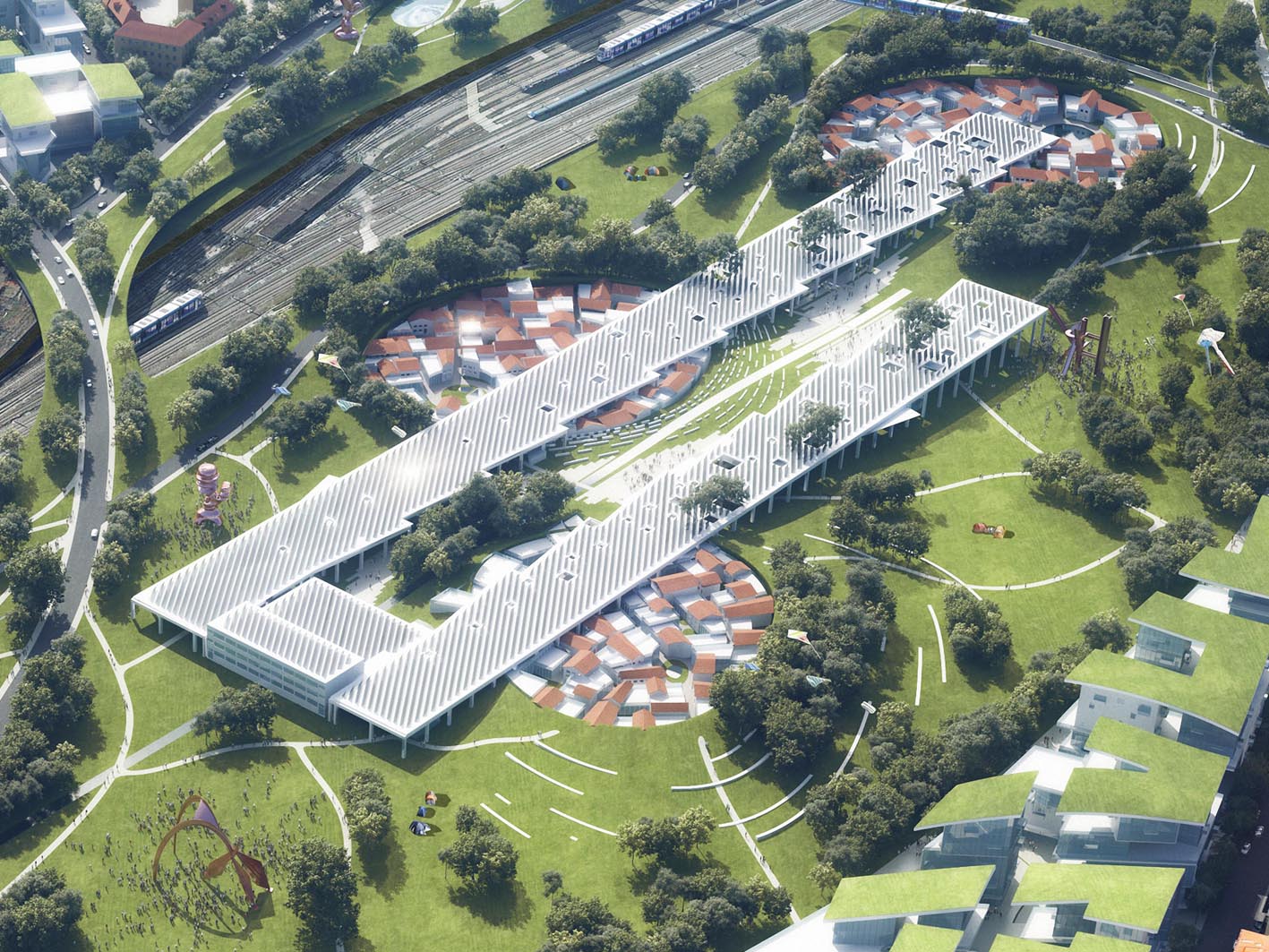 Accademia di Brera at Scalo Farini (Via Valtellina 12)
The new Scalo Farini
So, what will the new Farini area be like? The redevelopment of the yard will mark the birth of a new district. Farini will join the "club" of Milan's most modern — and most sought-after — areas. The key elements of the new Farini, a green and sophisticated place, can be summed up as follows.
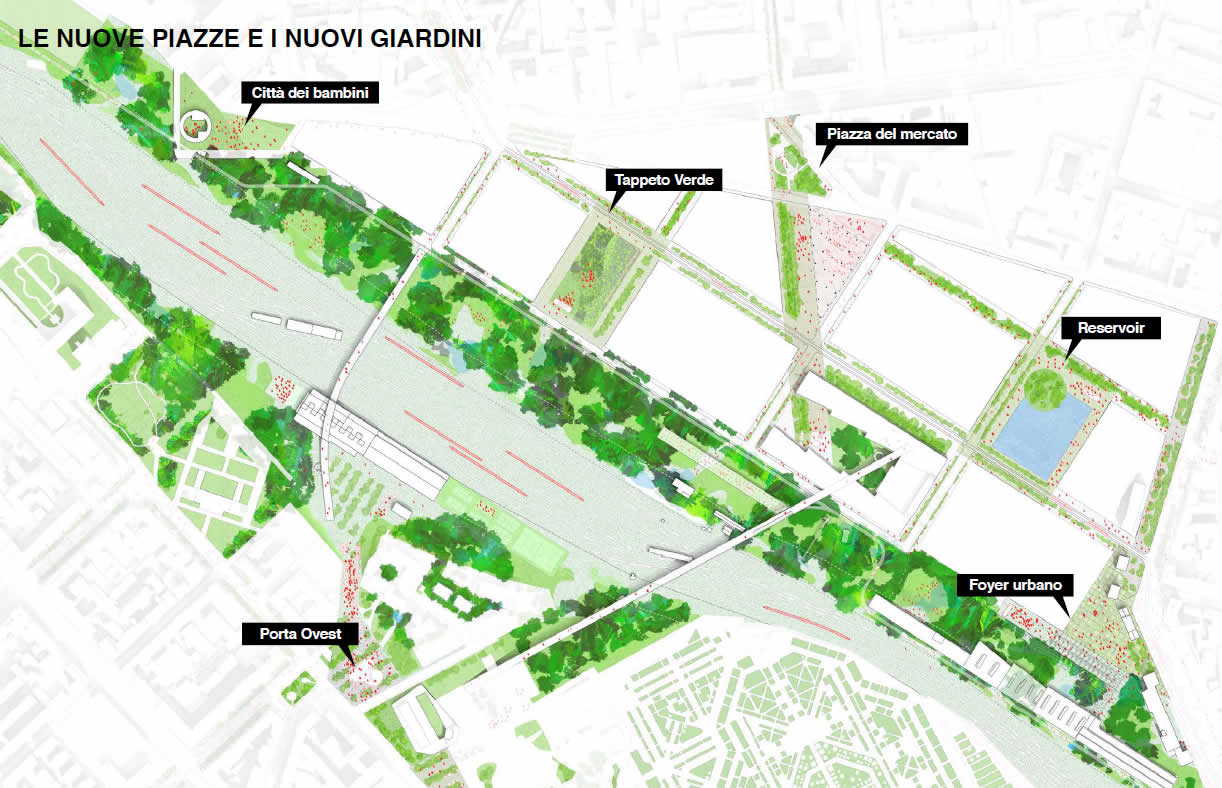 Squares and gardens of the new Farini district
- a green heart represented by the new park flanking the tracks to the north-east, from Via Valtellina to the height of Via Caracciolo. The currently existing and fragmented greenery will be recomposed and integrated with new public services;
- a new urban settlement made up of blocks inspired by anti-zoning, with a regular street grid;
- public spaces that shape local hubs, called upon to serve different functions;
- recovery and enhancement of the historic structures already present inside the yard (an estimated total surface of nearly 50,000 sqm). These structures are intended to host major players in our city's economic and social fabric, such as the Accademia di Brera.
Connections and mobility
- overcoming the current tracks via two land bridges, called the Ponte delle Arti and Ponte Nuovo;
- strengthening of mobility services. Our area is already very well served. Nonetheless, a new exit south of the Lancetti passante station and a new tram line are planned. The new line will connect the district between Bovisa and Porta Nuova. The new Porta Venezia–Bovisa express cycle path will also pass through Scalo Farini.
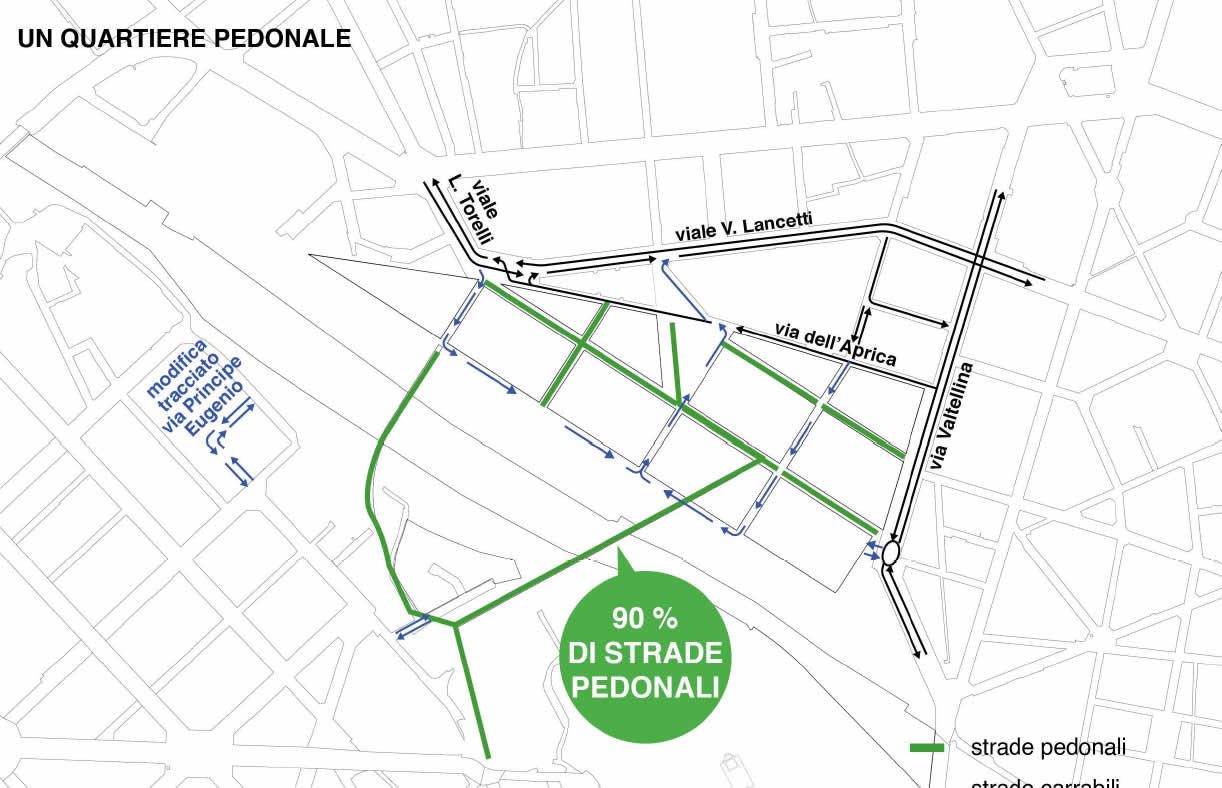 Farini: a pedestrian district
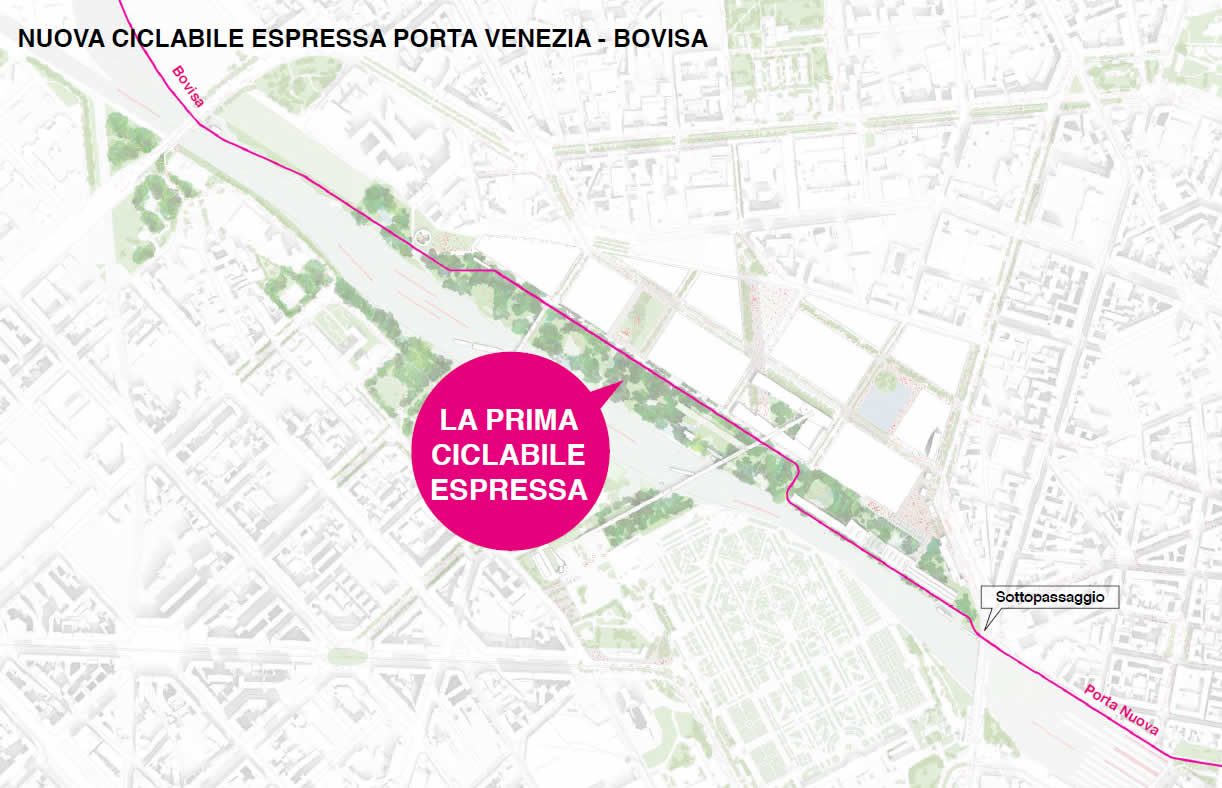 Porta Venezia–Bovisa cycle path
Let us move on to the main interventions to be carried out inside Scalo Farini. We note a series of gardens, squares and — in general — spaces intended for the economic and social development of the new Farini, such as:
- the Children's City (Città dei Bambini);
- Porta Ovest;
- the Green Carpet (Tappeto Verde);
- the Market Square (Piazza del Mercato);
- the Reservoir;
- the Urban Foyer (Foyer Urbano).
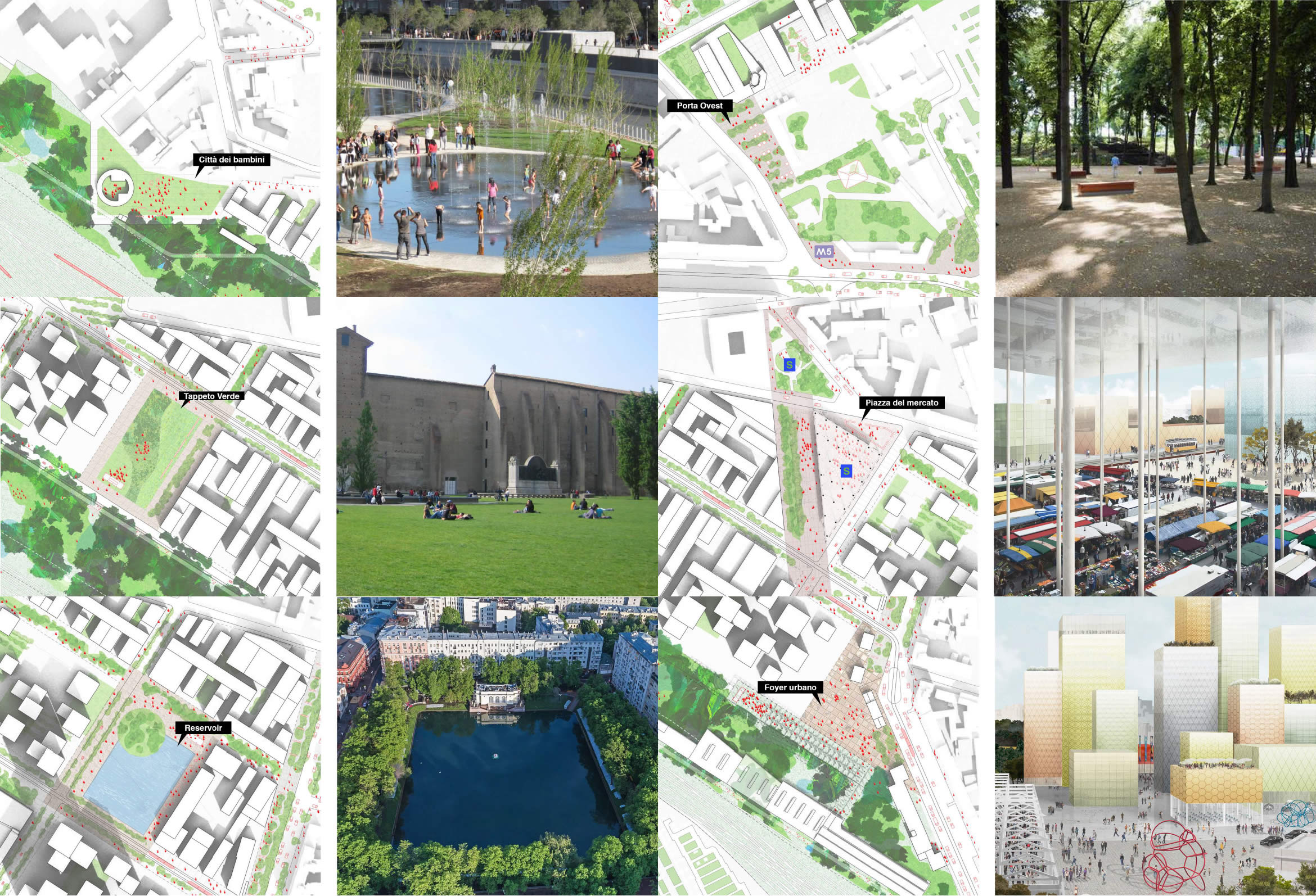 Scalo Farini: interventions and designers' references
Scalo Farini: where the works stood (2021-2023)
Anyone following Councillor Pierfrancesco Maran's social profiles will have noticed no shortage of prompts from users on the topic. Maran often updates those interested on the progress of the Farini project, frequently on the sidelines of presentations of related projects, such as those of the other railway yards. For example, in April he stated that "the Scalo Farini has two parts. One, the so-called Valtellina lot, received a preliminary implementation-plan proposal, following the general Masterplan. The municipal offices and Municipio 9 have commented on this proposal. We now await the definitive presentation by the operator Coima Sgr. On the other part, the larger portion, FS Sistemi Urbani has selected all the consulting firms to call a tender for development. This will happen during the current year. Meanwhile, the preparatory works for the arrival of the Accademia di Brera are proceeding**".
Later, on 29 July 2021, the file relating to the Implementation Plan proposal for the Valtellina unit of Scalo Farini was published on the City of Milan website. Then, in February 2022, the first images were released of what the yard's most important lot — the Valtellina lot — will really look like, and among the published renderings a tower also appeared.
After Coima SGR's 2018 purchase of the so-called Valtellina lot, on 27 April 2023 the sale of the second lot of Scalo Farini was launched by FS Sistemi Urbani, with the presentation to the public and to investors of the project's potential and the start of the sales procedures.
Scalo Farini: real-estate market trends
Our district is of course the object of strong attention from the real-estate market. Already today, when the redevelopment of the yard has not yet begun. In two previous analyses we described the effects of the anticipated rebirth of Scalo Farini on the market. It is worth, however, highlighting two very important figures in this examination of the Scalo project.
Real-estate market trend
The average sale value is falling in all central and semi-central areas. The only exception is the Farini, Isola, Sarpi cluster, which posts a +2.17% (per sqm) compared with 12 months earlier. These three areas are the only ones showing, in the "post-Covid" period, growth on par with previous years. And it is no coincidence that they are areas recently subject to major renewal (Isola and Sarpi, given their proximity to Porta Nuova), or with radical redevelopment projects (Scalo Farini). Cross-referencing these data with the substantial stability of Porta Romana and CityLife values, one can gauge how much driving force city-modernization projects have for real estate. The most disruptive and visionary projects, note well.
The new Milan
Another aspect is the now-evident centrality of the new Milan. CityLife and Porta Nuova are the true driving centres of the Milanese city. The symbols of a city that wants to leave the pandemic behind and start running again. Scalo Farini will be a new stage for this propulsive force and one of the icons of the new Milan.
Scalo Farini today: the state of works in 2026
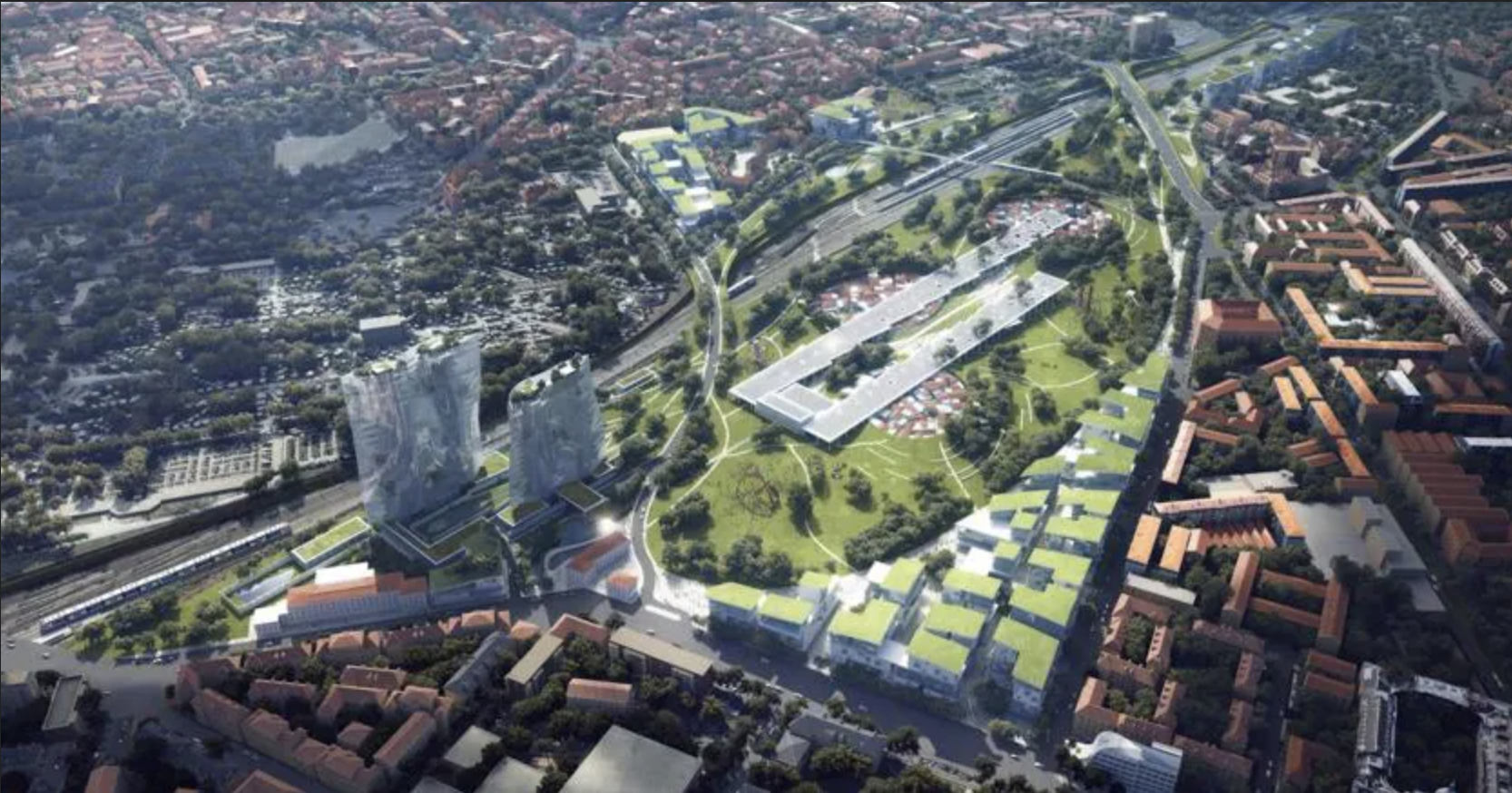 Aerial view of Scalo Farini
If the vision is the one described above, the reality of the construction site has only recently gathered pace. On the urban-planning front, the definitive proposal for the Integrated Intervention Programme (PII) for the "Farini Special Zone – Yard Unit" was presented on 4 December 2024 and published in January 2025; the Strategic Environmental Assessment (VAS) was launched on 18 March 2025. The general implementation plan has not yet been approved, with a stated target for 2027. The area is divided into two sectors proceeding on their own timelines: the Valtellina lot, owned by COIMA (which acquired it in 2018), further along in the process; and the main area, awarded in December 2023 to the Hines-UniCredit-Prelios consortium with a €500 million bid. Total estimated investments are around €1.2–1.5 billion.
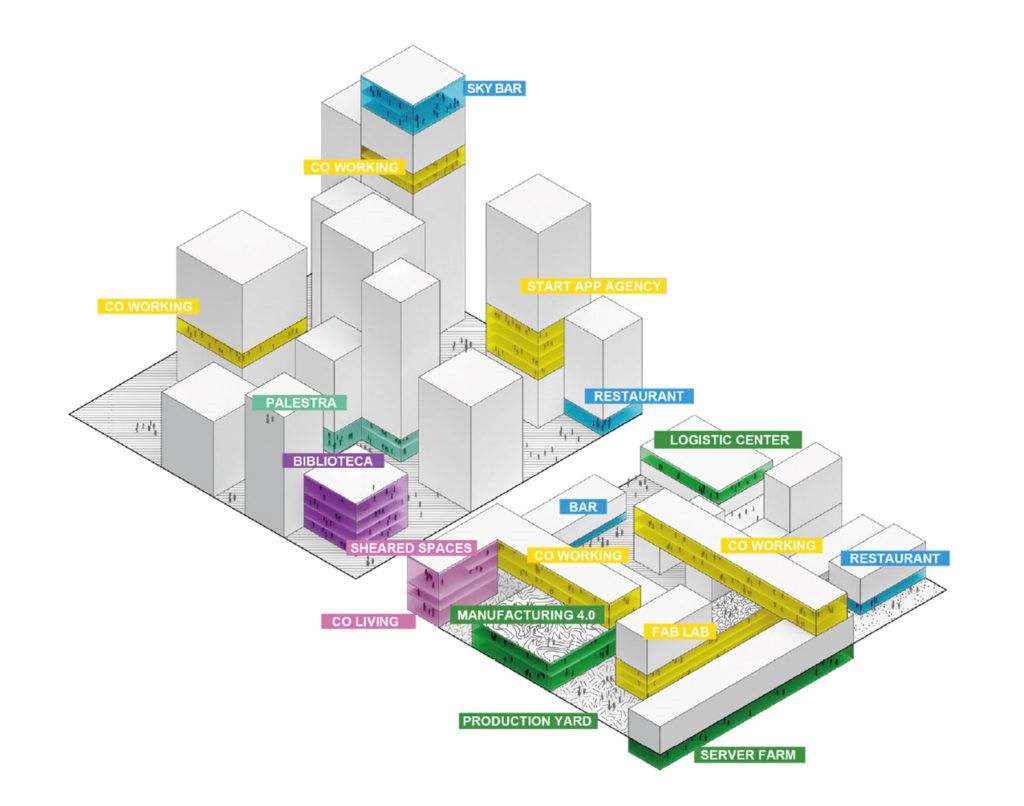 The masterplan of Scalo Farini
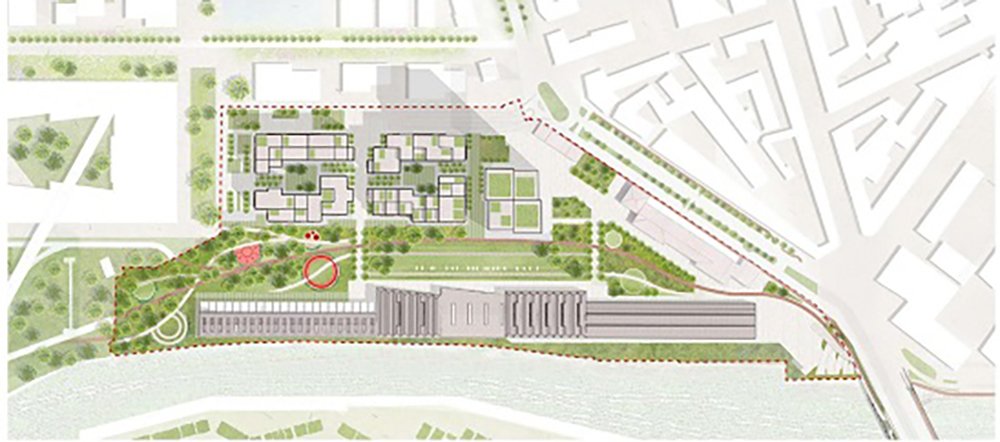 The Valtellina lot of Scalo Farini
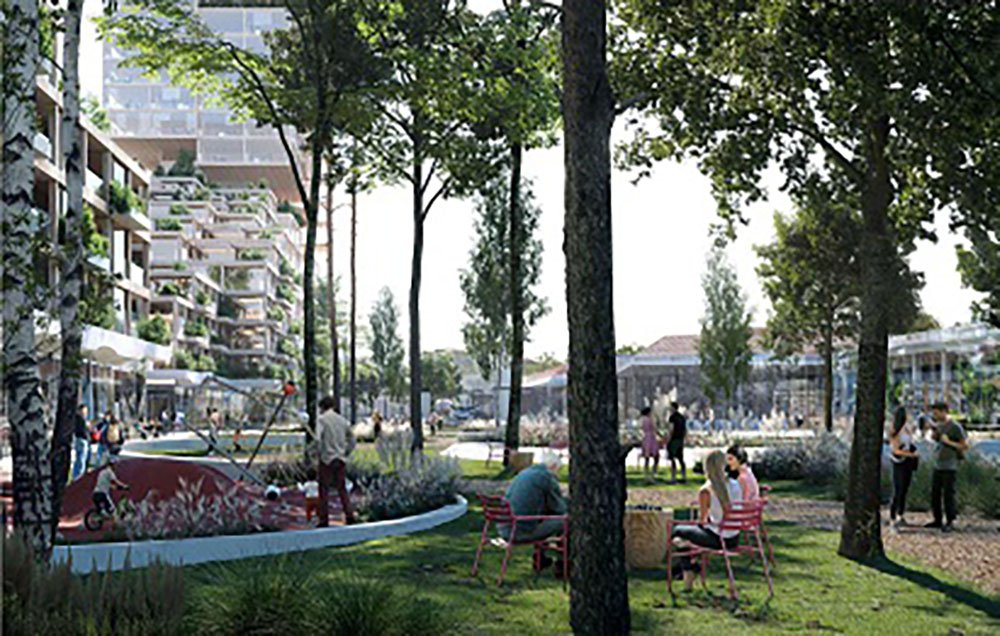 Rendering of the Valtellina lot
The state of the area: remediation and demolitions
Since January 2026 the major remediation works of the former Scalo Farini have begun, together with the first demolition and clean-up works, concentrated above all in the area towards Viale Lancetti and the Passante railway station. New hoardings with transparent panels have been installed along the yard's perimeter, allowing people to follow the progress of the works. For now these are preparatory activities: the current phase is site preparation, ahead of the actual civil works.
The seven projects of Scalo Farini
Within the yard's perimeter several distinct projects coexist, with different clients, designers and timelines. Here is where they stand.
1. Campus of the Arts – Accademia di Brera (site preparation)
It is the project with the longest history. The collaboration between FS and the Accademia di Brera began in 2018 with a temporary lease; in December 2021 the preliminary agreement for the purchase of the lots was signed, and from August 2022 the area's remediation began. In February 2024 Brera became the owner of the areas and the campus project was entrusted to the studio Settanta7 (with Openfabric for the landscape). The PNRR-linked deadline, set for 2026, has however slipped: completion is now estimated around 2029. In April 2026 the first roughly 1,500 sqm were occupied, in still-temporary spaces.
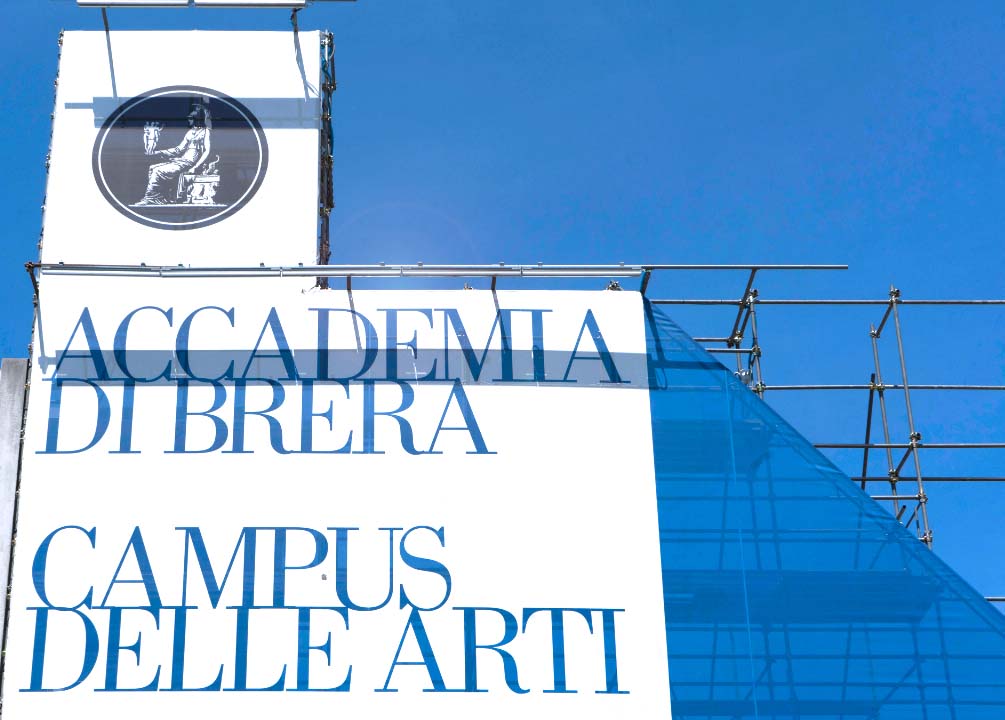 The new Brera Campus at Scalo Farini
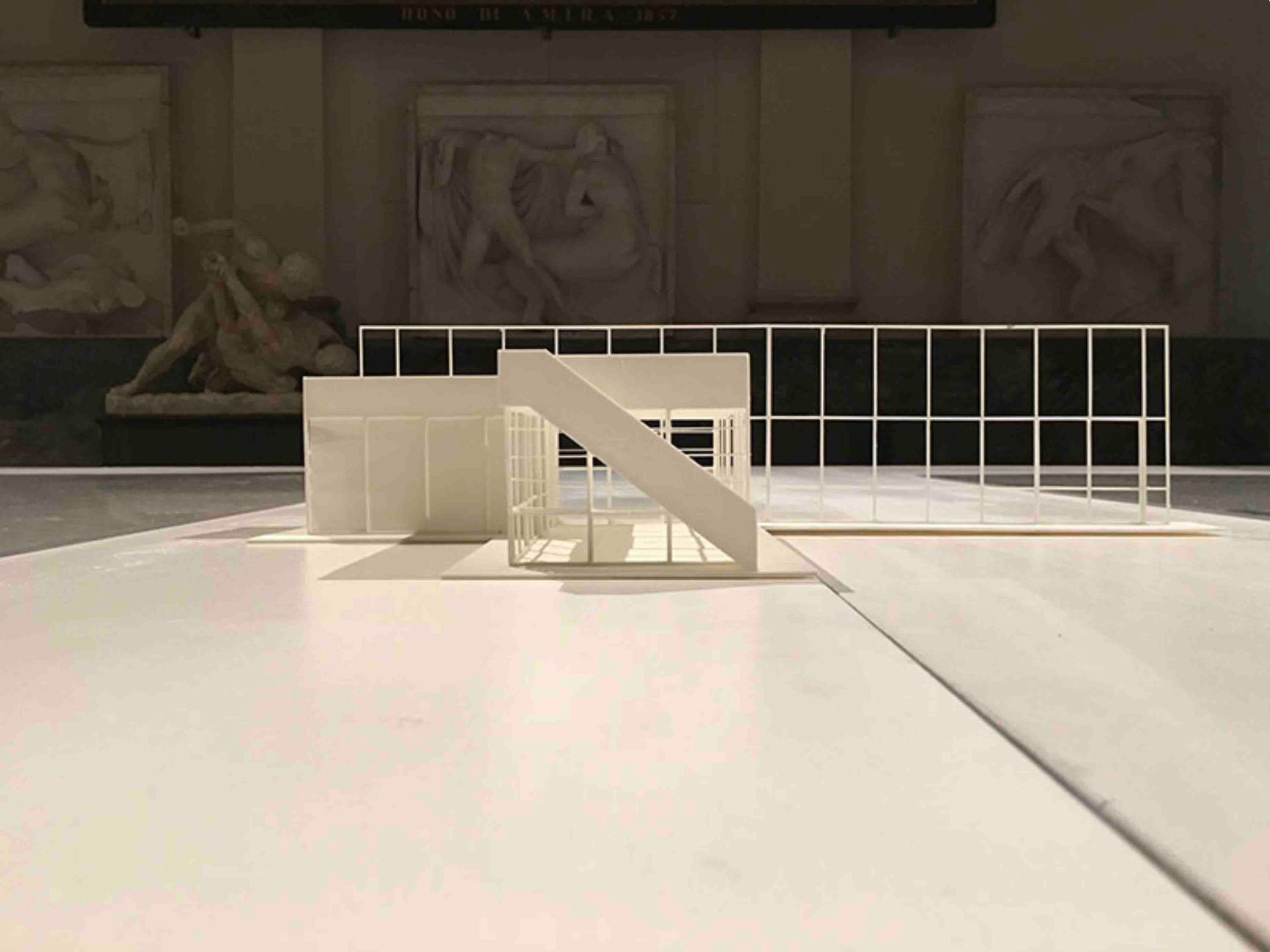 Brera at Scalo Farini
2. Accademia di Brera student housing (site preparation)
Announced in 2022 as a building of about 10,000 sqm with 400 beds (€12 million), the student housing has changed shape: in September 2024 the project by Studio Mate was presented, downsized to 200 beds, to NZEB standards and "gas-free". As of mid-2026 actual construction has not yet started — the area is undergoing remediation and demolition of pre-existing structures — and realistic completion slips towards 2029. It is the component with the most marked delay compared with the initial plans.
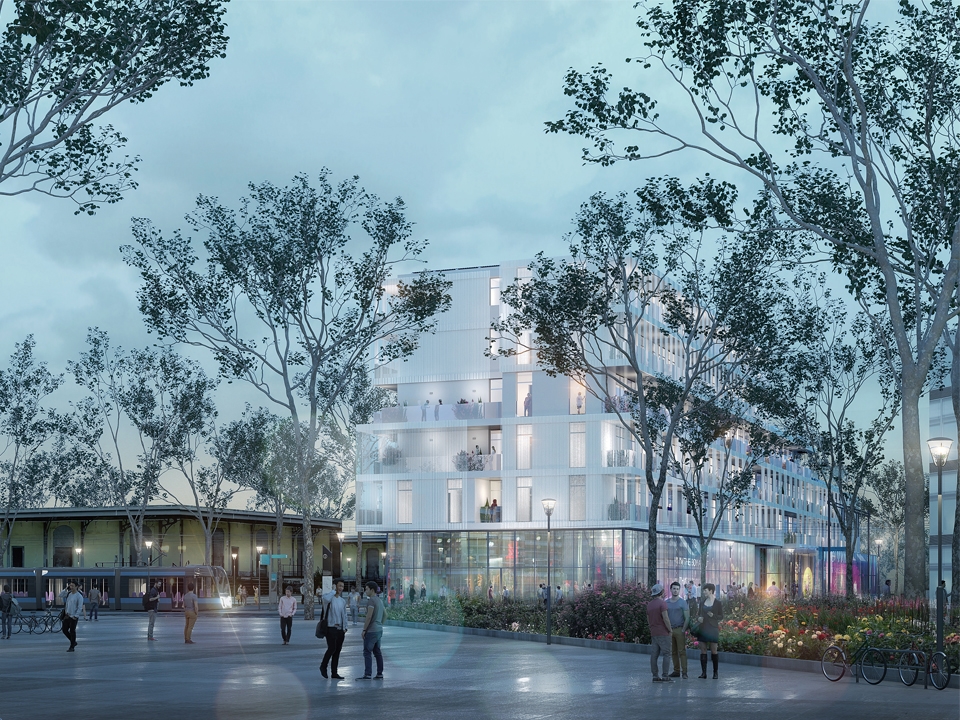 Rendering of the new Accademia di Brera student housing
3. New UniCredit headquarters (masterplan and permits)
The Hines-UniCredit-Prelios consortium won the tender for the main area in December 2023. In June 2024 incentives were defined to speed up the process: a total premium of €16 million (€8 million if the implementation plan arrives by 2027, another €8 million if the building permit arrives by 2030). In June 2025 UniCredit announced the studio Herzog & de Meuron as designer of the new headquarters. The stated goal is completion by 2030 — a date that coincides with the expiry of the lease on the Piazza Gae Aulenti towers — but there is still no construction site on the lot and the realistic horizon is further off, towards the middle of the following decade.
4. Open-market housing (site preparation)
Open-market residences are distributed across both sectors: in COIMA's Valtellina lot (where the implementation plan envisages 7,673 sqm of open-market residential space and a first tower of about 22 floors) and in Hines's main area, whose implementation plan is expected by 2027. The process was also affected by Milan's 2025 urban-planning investigation, which slowed down several procedures in the city.
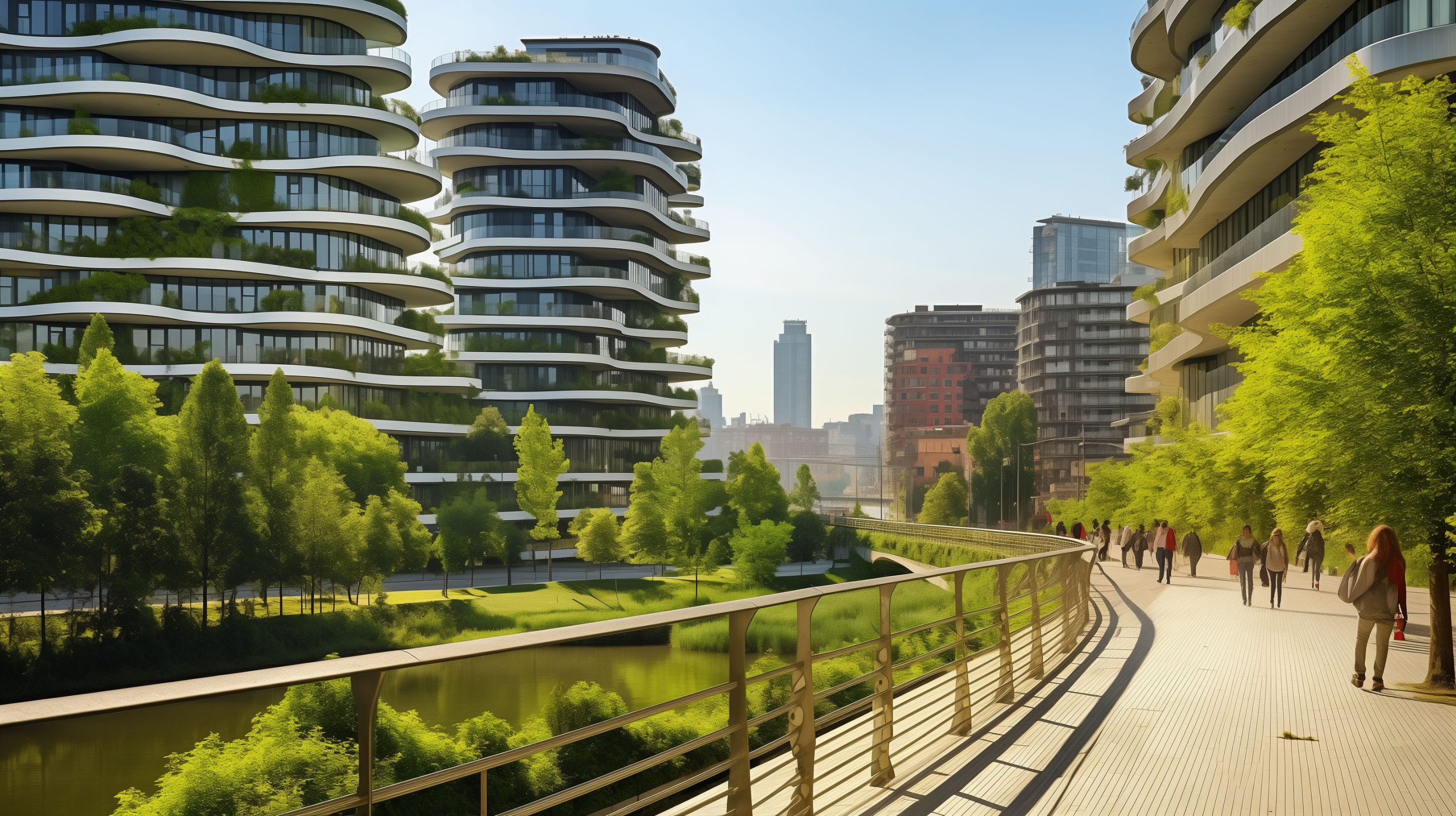 Rendering of the new residential development (1)
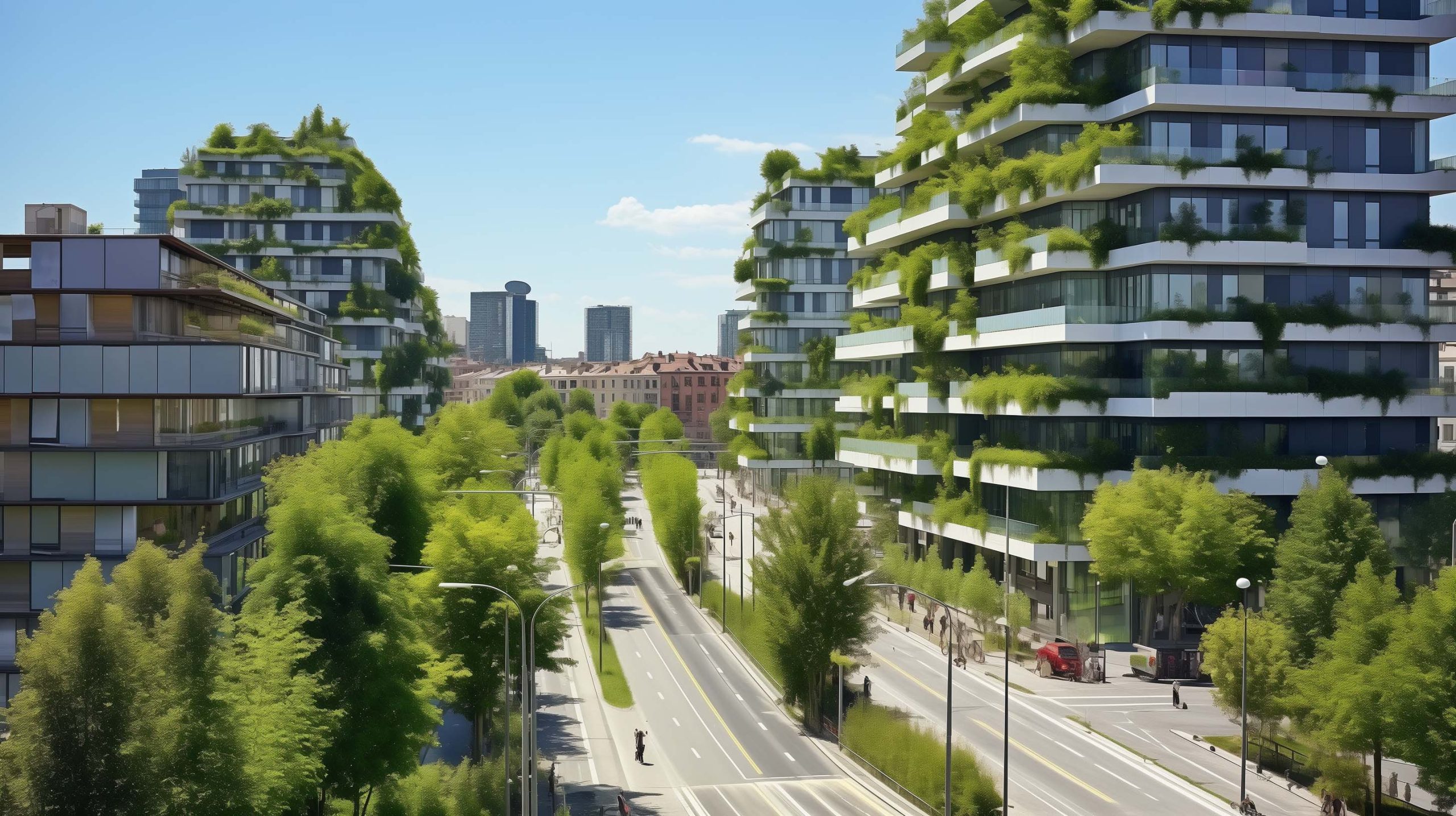 Rendering of the new residential development (2)
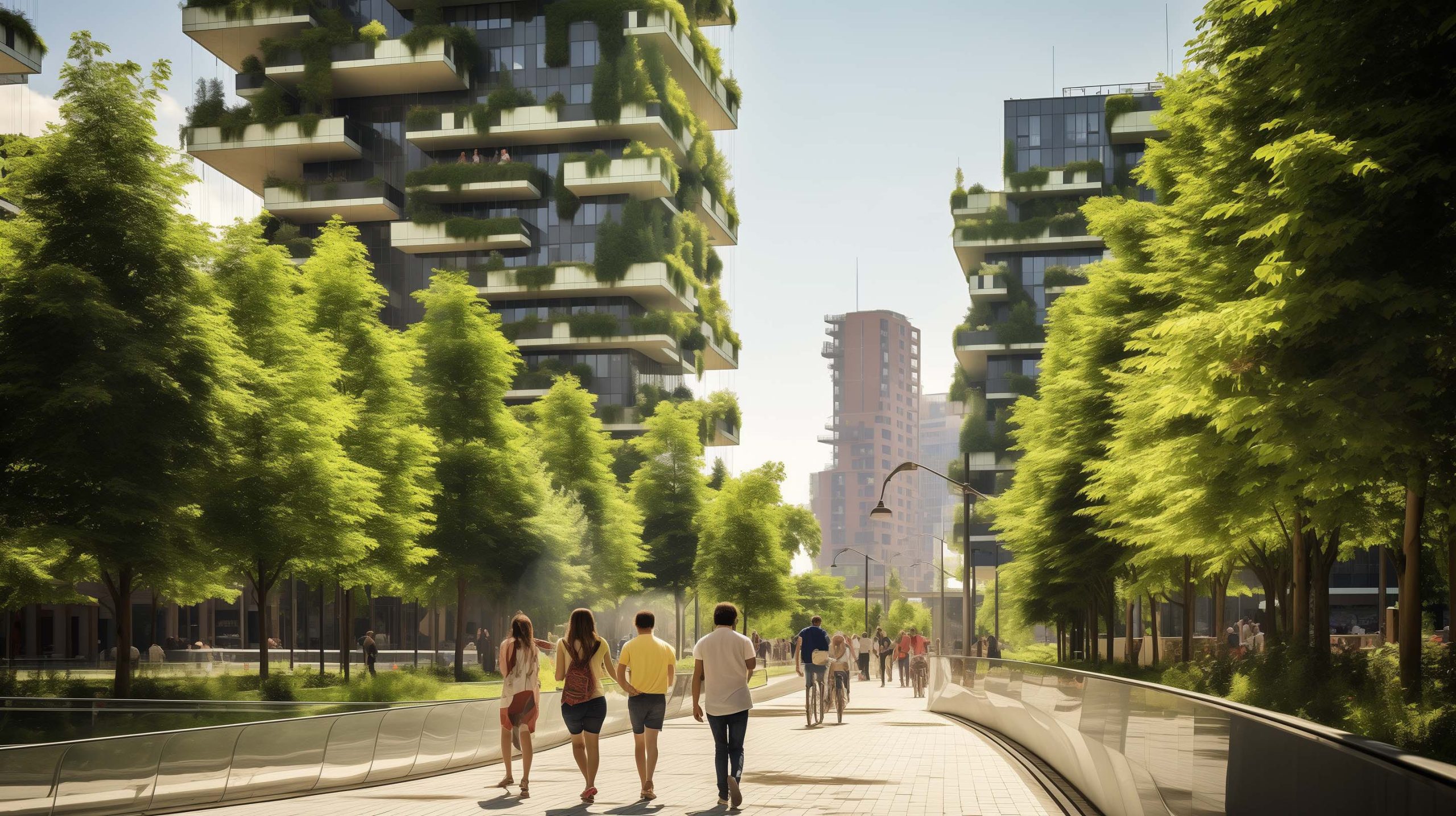 Rendering of the new residential development (3)
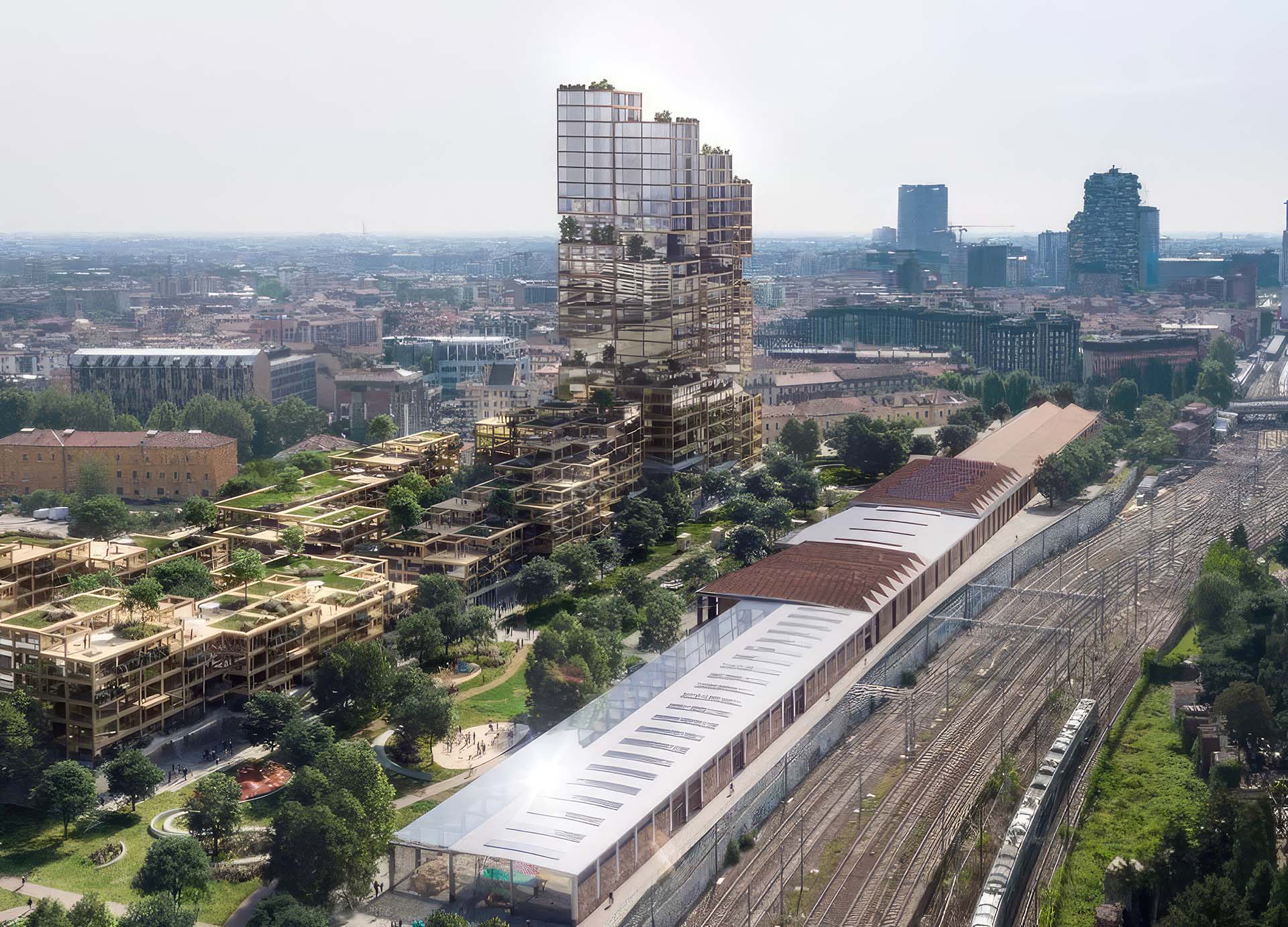 Tower at Scalo Farini, hypothesis (rendering)
5. Social housing (ERS) (site preparation)
The share of public and subsidised housing has grown over time: from the first estimates in 2020 (1,000–1,500 units), it was raised in 2023 up to 30% of the total, equal to about 1,800 units between social and price-controlled housing. The PII framing it was presented at the end of 2024 and is still in the authorisation process.
6. The park (site preparation)
The large linear park is the green heart of the "Agenti Climatici" masterplan. Remediation of the area began in January 2026, but some uncertainties weigh on the park: press sources report the risk of a downsizing of the linear park — which in some portions could shrink to a tree-lined avenue owing to the non-demolition of certain pre-existing sheds — with about 180 tall trees and a new tramway said to be at risk. There is also, for now, no unified masterplan: each operator works on its own lot.
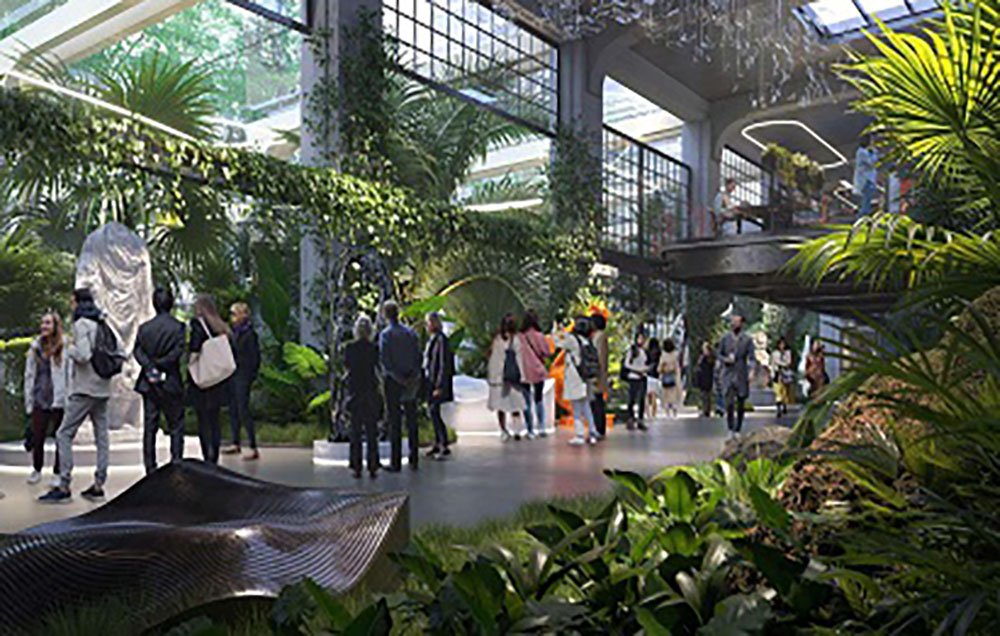 Public spaces
7. The connecting bridges (masterplan and permits)
The masterplan envisages two land bridges spanning the tracks: the Ponte delle Arti (towards the Accademia di Brera area and the M5 Monumentale) and the Ponte Nuovo (connecting Dergano-Bovisa with Sarpi and Porta Volta). They are framed within the PII presented at the end of 2024, but there is still no executive design or construction site: their realisation requires heavy works to decommission and move the tracks, in coordination with RFI.
What has changed from the original project
- Brera student housing: from 400 to 200 beds, with a change of designer (from the campus team, Settanta7, to Studio Mate for the individual building).
- Social housing: share increased up to 30% of the mix (about 1,800 units), for more public and price-controlled homes (2023).
- Linear park: at risk of downsizing, with about 180 tall trees and the new tramway reported at risk by press sources.
- UniCredit headquarters: the 2030 target remains stated but is considered optimistic, with a more distant real horizon.
- PNRR timelines: campus and student housing, expected for 2026, have slipped towards 2029.
Timeline: from 2017 to today
- 2017 – Programme Agreement on Milan's disused railway yards.
- 2018-2019 – Competition for the masterplan: "Agenti Climatici" (OMA + Laboratorio Permanente) wins. COIMA acquires the Valtellina lot (2018).
- 2021 – Preliminary agreement signed for the Brera Campus of the Arts (December).
- 2022 – First leaks about COIMA's project (February); start of remediation of the campus area (August).
- 2023 – Increase in the share of subsidised housing; launch of the sale of the second lot by FS Sistemi Urbani (April); the Hines-UniCredit-Prelios consortium wins the tender for the main area (December, €500 million).
- 2024 – Brera becomes owner of the areas (February); €16 million in incentives for the UniCredit headquarters (June); the Studio Mate project for the student housing, 200 beds, is presented (September); presentation of the PII (December).
- 2025 – Publication of the PII (January) and launch of the VAS (March); Herzog & de Meuron chosen for the UniCredit headquarters (June).
- 2026 – Launch of the major remediation and demolitions, installation of the hoardings (January); masterplan update (March); first temporary spaces of the Brera campus (April).