Safety in Milan, March 2026: the 10 lowest-ranking neighborhoods are all in the city center
Analysis across 144 neighborhoods: the news-based Safety index reveals a city center in growing difficulty
Centrale closes the Milan neighborhood Safety ranking at 10.10 points out of 100 -- one sixth of the city median of 68.41. Last out of 144 neighborhoods, with a clear gap to the second-to-last. But the most significant figure is not the position: five years ago, the same neighborhood scored 34.46. Already low, but more than triple today's value. The trajectory is unambiguous.
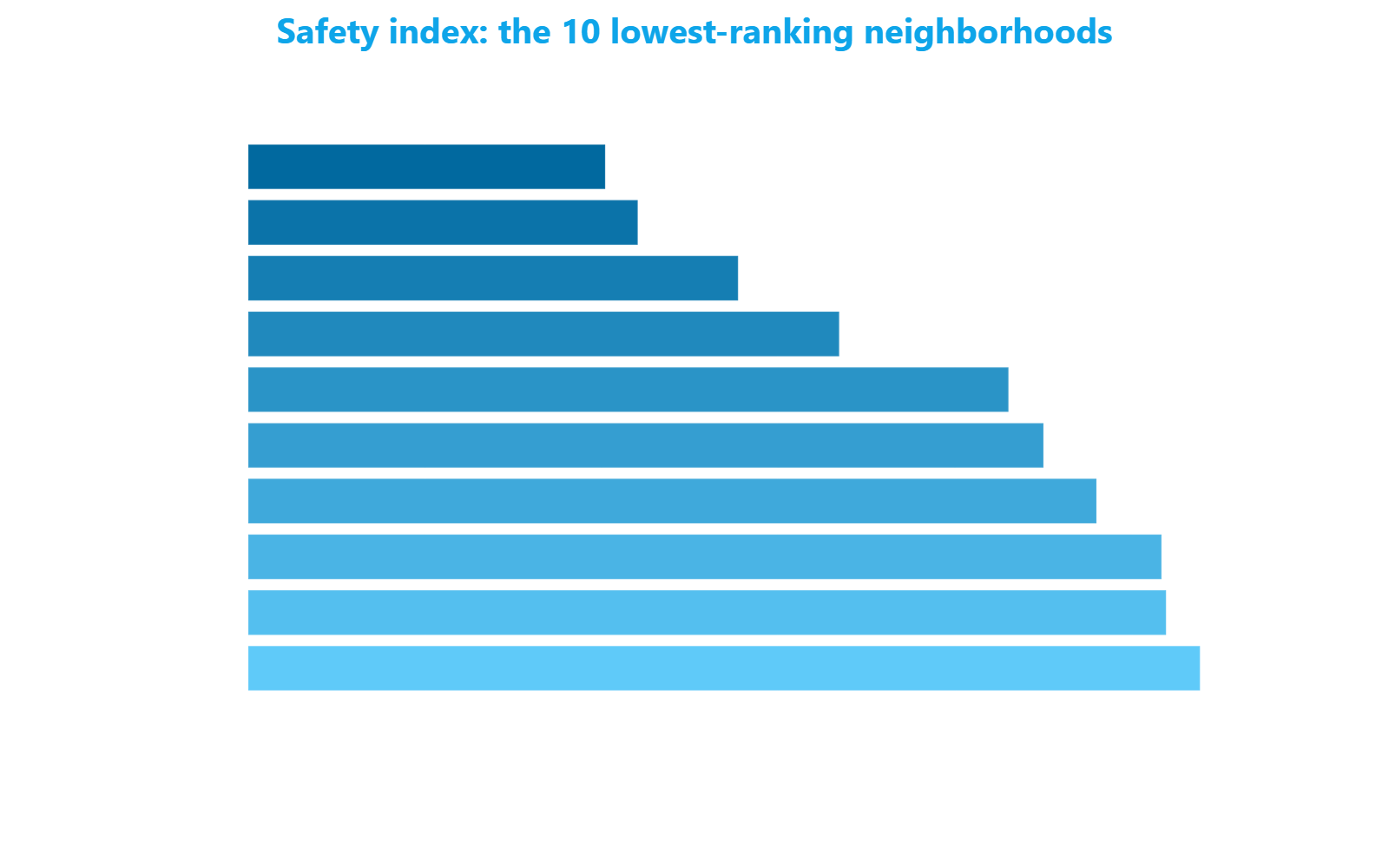
The bottom of the ranking: three neighborhoods below 14 points
Centrale is not alone. Garibaldi - Corso Como follows with 11.02 points, and Buenos Aires with 13.86. Three neighborhoods below 14 points, all with the city median at more than five times their score.
Garibaldi - Corso Como is the clearest case of long-term deterioration. Five years ago it scored 50.22 -- above the first quartile threshold -- and held the 136th position. Today it sits at 143rd with 11.02 points: a drop of nearly 40 points that turned a low-ranking neighborhood into one of the bottom two. The Safety analysis is based on 27 crime categories monitored street by street, drawn from news reports -- all available in detail on the platform, with type, frequency and trend.
Buenos Aires shows a different profile. Its ranking position has remained essentially unchanged: 142nd today, 142nd five years ago. But the score has fallen from 42.50 to 13.86. The neighborhood was already among the worst, and it still is -- but with an index that has shrunk by two thirds.
Repubblica, fourth from the bottom with 16.72 points, follows a similar script: in the lowest quartile for at least five years, with a score that has dropped from 39.91 to less than half.
How much has Safety worsened in central Milan?
All ten neighborhoods at the bottom of the ranking have undergone sharp long-term deterioration. The average decline exceeds 25 points over five years: Centrale went from 34.46 to 10.10, Garibaldi - Corso Como from 50.22 to 11.02. The downward compression has been across the board, with scores that five years ago ranged between 34 and 58 now sitting between 10 and 27.
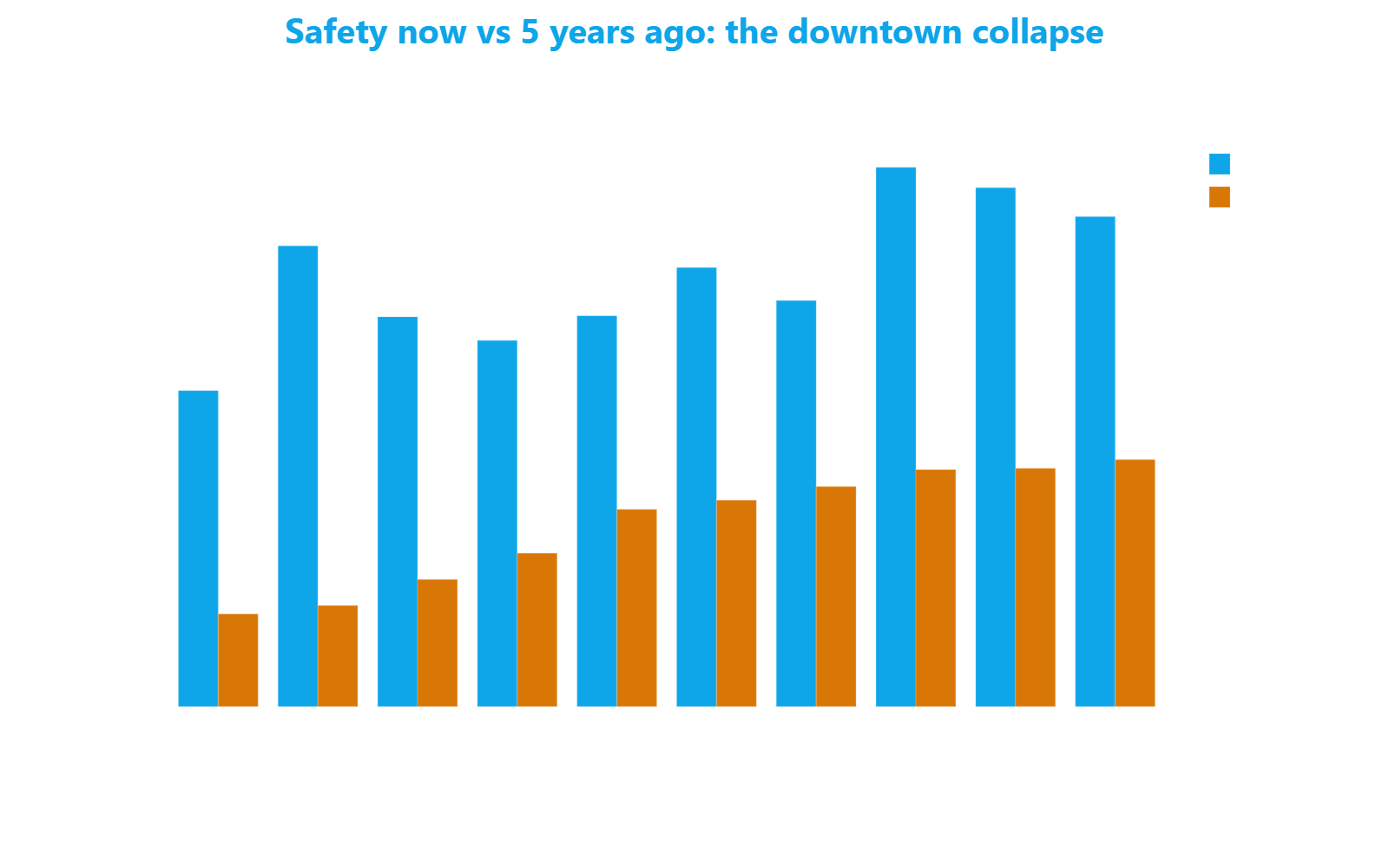
The pattern: a downtown in decline
Scanning the ten names -- Centrale, Garibaldi - Corso Como, Buenos Aires, Repubblica, Melchiorre Gioia, Porta Venezia, Duomo, Scala - Manzoni, Moscova, Pasteur -- the striking fact is geographic. They are all central or semi-central neighborhoods. No suburbs, no residential areas far from the main flows. It is Milan's commercial, tourist and business core that occupies the last ten positions out of 144 neighborhoods.
And the trend is shared. All ten show a sharp long-term decline. Scala - Manzoni five years ago scored 58.80 points and ranked 123rd -- in the lower half but not at the tail. Today it sits at 137th with 25.84 points: it has lost 14 positions and more than half its score. Moscova follows a similar arc: from 56.56 points and 128th place to 25.97 points and 136th.
Even Duomo -- the flagship neighborhood -- is no exception: 24.00 points today versus 44.27 five years ago, stuck in the bottom positions for at least four years.
Which are Milan's least safe neighborhoods in 2026?
According to the Safety index calculated across 144 neighborhoods, the ten with the lowest scores in March 2026 are all in the city center: Centrale (10.10), Garibaldi - Corso Como (11.02), Buenos Aires (13.86), Repubblica (16.72), Melchiorre Gioia, Porta Venezia, Duomo, Scala - Manzoni, Moscova and Pasteur. None exceeds 27 points out of 100, against a city median of 68.41.
What separates the bottom from the rest
Between the first and last of the worst-ranked neighborhoods there are 16.83 points: Centrale at 10.10 and Pasteur at 26.93. But even Pasteur, the "best of the worst", remains at less than half the city median. The gap between this group and the rest of Milan's neighborhoods is wide and has grown over time: five years ago the spread was narrower, with scores ranging from 34 to 58. Today it is between 10 and 27. The downward compression has been widespread but uneven: Centrale and Garibaldi - Corso Como have suffered the most severe deterioration, while Melchiorre Gioia and Porta Venezia have settled at low but relatively stable levels over the past two years.
The distance between these neighborhoods and the 68.41-point median reveals a city center where the concentration of reported crime incidents is structurally higher than in the rest of Milan -- a pattern consolidated over the years, not a recent anomaly.
Methodology: ranking based on the Safety index calculated across 144 Milan neighborhoods. Period: March 2026. The index aggregates 27 crime categories drawn from news reports, with monthly monitoring. Neighborhood values are computed as the average of their constituent streets, covering 4,006 streets. The dataset includes 105 metrics with monthly history from January 2020. Data from public and proprietary sources.
Frequently Asked Questions
Which is the least safe neighborhood in Milan?
As of March 2026, Centrale holds the lowest Safety index score: 10.10 out of 100, roughly one sixth of the city median of 68.41. Five years ago the same neighborhood scored 34.46, highlighting a steady deterioration over time. Garibaldi - Corso Como (11.02) and Buenos Aires (13.86) complete the bottom of the ranking.
Is central Milan less safe than the outskirts?
According to the data, yes. All ten neighborhoods with the lowest Safety index scores are central or semi-central: from Centrale to Duomo, from Porta Venezia to Moscova. No suburban neighborhood appears in the bottom ten of the 144-neighborhood ranking, a finding that reflects the higher concentration of reported crime incidents in high-traffic areas.
How is the neighborhood Safety index calculated?
The index aggregates 27 crime categories drawn from news reports, monitored monthly on a street-by-street basis. Each neighborhood's score is the average of its constituent streets, covering 4,006 streets. The historical record starts from January 2020, enabling five-year comparisons.
Is the Safety decline in the center a recent phenomenon?
No. The drop in scores across central Milan is a trend consolidated over at least five years. Garibaldi - Corso Como went from 50.22 to 11.02 points, Centrale from 34.46 to 10.10. The downward compression has been progressive, with an acceleration over the past three years for neighborhoods already at the bottom of the ranking.
Are there any central neighborhoods that have held steady?
Among the bottom ten, Melchiorre Gioia and Porta Venezia show a relatively more stable profile over the past two years, while remaining at low levels. Unlike Centrale and Garibaldi - Corso Como, which have experienced the sharpest deterioration, these two neighborhoods have plateaued without further significant drops in the recent biennium.