Milan Safety ranking, March 2026: the 10 streets at the bottom
Crime news analysis across 4,006 streets reveals where offences concentrate most — and how conditions have worsened over the past five years.
Ten streets, all at zero. The Safety index — built on systematic crime news monitoring, tracking 27 crime categories street by street — assigns the lowest possible score to ten of the city's busiest roads and squares. The city median stands at 66.30 points: these streets don't reach one. They occupy rank 3,975 out of 4,006, in the bottom 0.8% of the city. The analysis, based on crime news data and proprietary sources, spans over five years with monthly updates.
The north-east axis: eight out of ten streets
The ranking's geography reveals a clear pattern. Eight of ten streets cluster along an axis running through the north-east quadrant of the city: from Stazione Centrale up toward Buenos Aires, Porta Venezia, Garibaldi and Isola. Three squares orbit around Centrale — Piazza Duca D'Aosta, Piazza IV Novembre and Piazza Luigi di Savoia — joined by Corso Buenos Aires and Piazza Argentina in the Buenos Aires neighborhood, Corso Como and Piazza Gae Aulenti in Garibaldi - Corso Como, Piazza Guglielmo Oberdan in Porta Venezia and Piazza Sigmund Freud in Isola. The only exception is Piazza Ventiquattro Maggio, in Ticinese, the sole southern point on this list.
These are not hidden alleys. They are squares, boulevards, transit hubs — high-footfall locations where the density of people and activity mirrors the concentration of reported crime.
Which are Milan's least safe streets in 2026?
According to the ranking updated to March 2026, the ten streets with the lowest Safety score (zero out of one hundred) are concentrated in the city's north-east axis, between Stazione Centrale, Buenos Aires, Porta Venezia, Garibaldi and Isola. The only exception outside this corridor is Piazza Ventiquattro Maggio in Ticinese.
Which streets fell the most
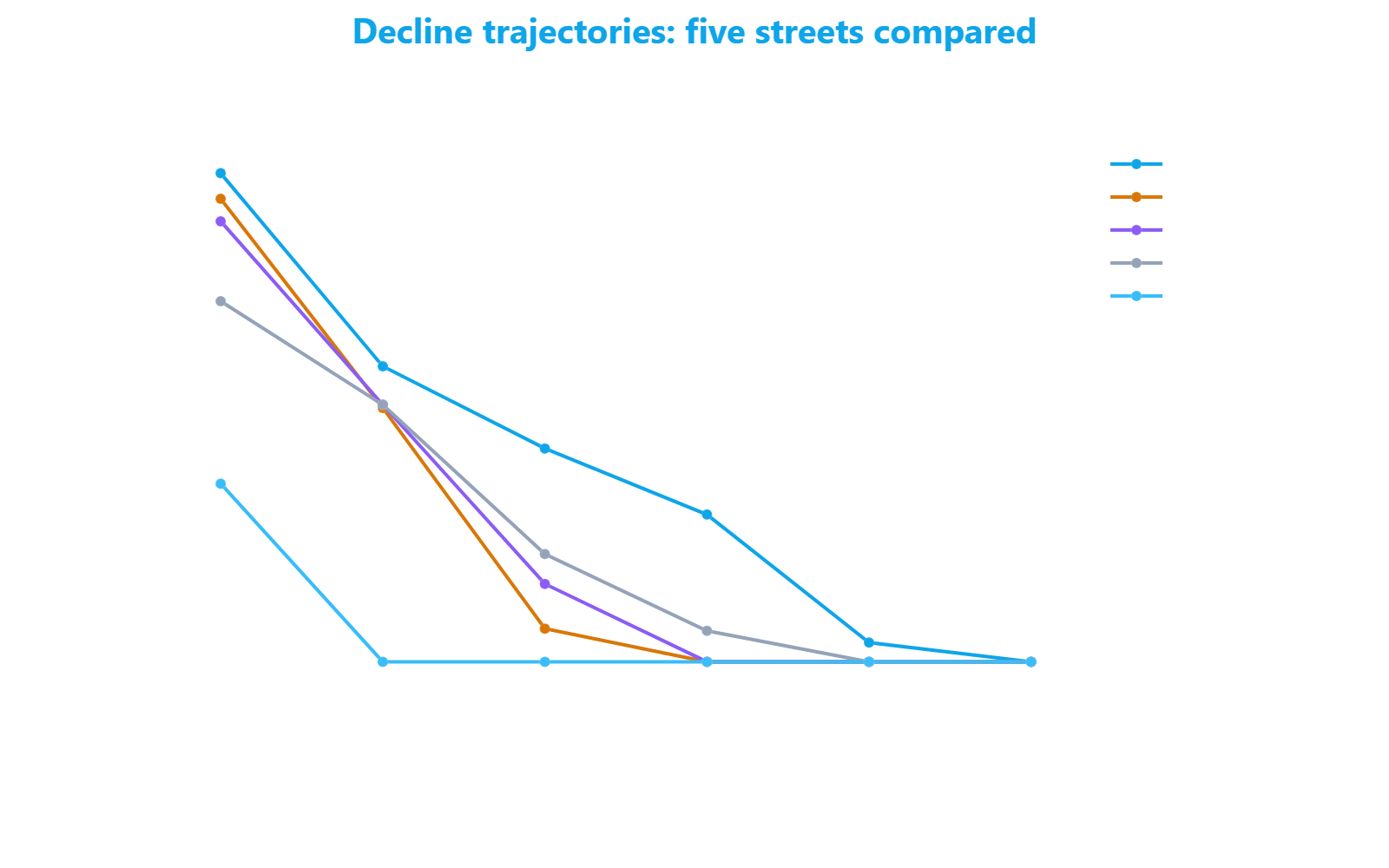
All ten streets show a steep downward trend, but their trajectories differ.
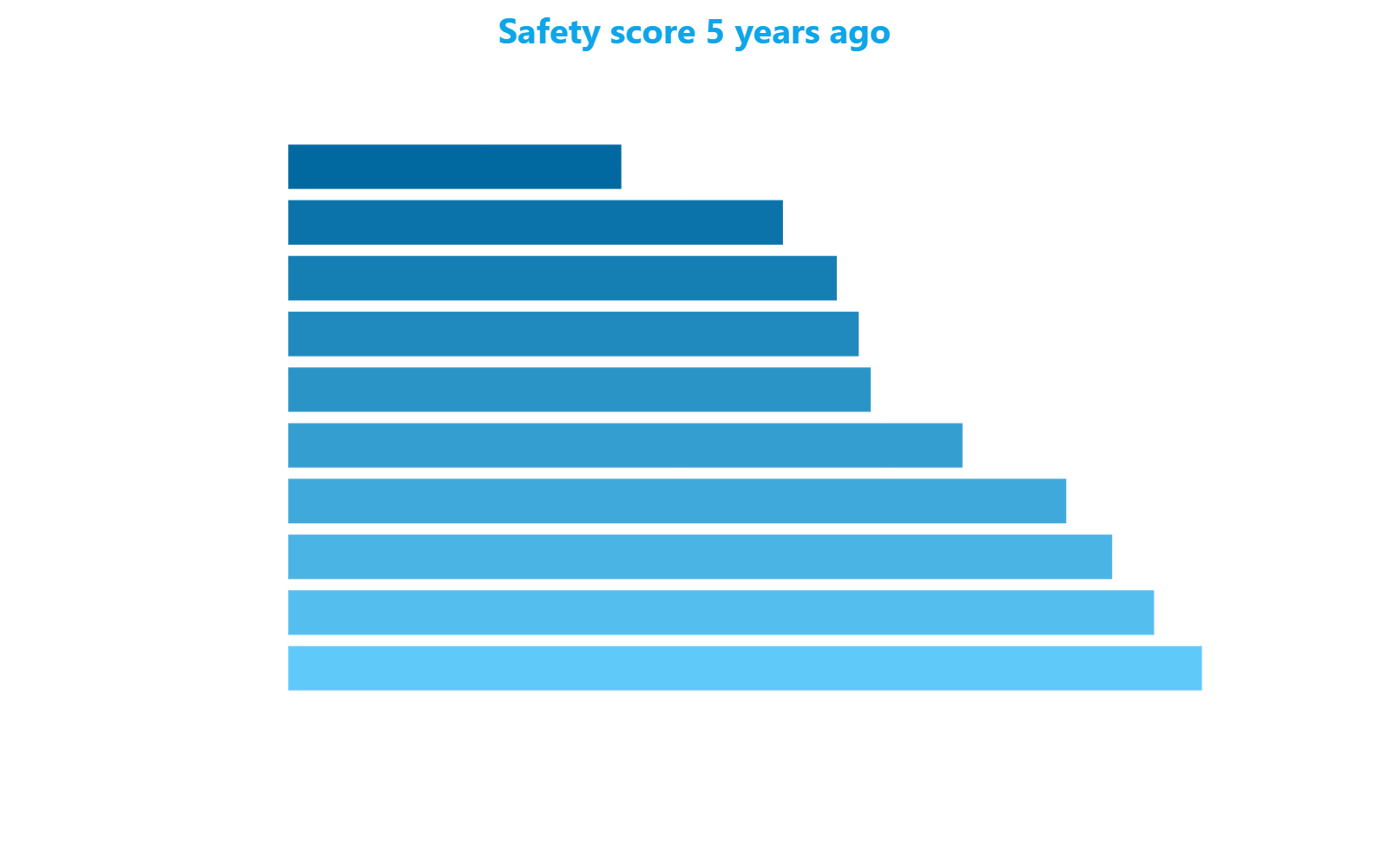
Piazza Argentina recorded the steepest absolute decline: five years ago it scored 45.80 points — below the city median, but still in the middle of the distribution. From there, the collapse was progressive down to zero. Corso Como followed a similar path: from 43.40 points five years ago to zero, passing through 3.10 three years ago before hitting bottom. Piazza Gae Aulenti tracked the same rhythm, from 41.30 to zero, with a decline that accelerated after 2023.
Piazza Duca D'Aosta tells a different story. Five years ago it was already at 16.70 points — the lowest value in the group at that time — and held the city's absolute last position (rank 4,006 out of 4,006). It didn't plummet: it was already at the bottom. A chronic condition, not a recent worsening.
How much has Safety worsened around Stazione Centrale?
The area around Stazione Centrale, including Piazza Duca D'Aosta, Piazza IV Novembre and Piazza Luigi di Savoia, has reached the minimum score of zero on the Safety index. Piazza Duca D'Aosta was already last in the ranking five years ago with 16.70 points; the other squares declined progressively, confirming a structural deterioration across the entire area.
A shared deterioration, not an isolated one
The most significant finding is not any single street, but the collective pattern. Five years ago these ten streets had scores ranging from 16 to 45 points — a wide spread, with heterogeneous conditions. Today they are all at zero, flattened to the same minimum. The Safety analysis, built on systematically collected and classified crime news data, tracks 27 crime categories monitored street by street — all available in detail on the platform, with type, frequency and trend.
The downward convergence suggests that Milan's north-east axis has undergone a widespread Safety deterioration, not limited to isolated hotspots. Streets that five years ago had different profiles — Piazza Argentina in the mid-range, Piazza Duca D'Aosta already at the bottom — now share the same score. The gap between the city median of 66.30 points and the bottom of the ranking has widened: a finding that questions the overall resilience of this urban axis, warranting case-by-case investigation.
Frequently Asked Questions
How many streets are monitored in Milan's Safety ranking?
The ranking covers 4,006 streets in Milan, each assessed through a Safety index built on systematic crime news monitoring. For each street, 27 crime categories are tracked, with monthly historical data starting from January 2020 that allows observation of trends over time.
Where are Milan's least safe streets located?
Eight of the ten streets with a zero score are located along the city's north-east axis, between Stazione Centrale, Buenos Aires, Porta Venezia, Garibaldi and Isola. The only street outside this corridor is Piazza Ventiquattro Maggio in Ticinese, south of the center.
What is the median Safety score across Milan's streets?
The city-wide median Safety index stands at 66.30 points out of one hundred. The ten streets at the bottom of the ranking are stuck at zero, a gap that highlights how far the most critical areas diverge from the city's average condition.
How is the street Safety index calculated?
The index is built on systematic crime news monitoring, tracking 27 crime categories street by street. Data comes from public and proprietary sources, covering 105 metrics with monthly updates starting from January 2020.
Has Piazza Duca D'Aosta always been at the bottom of the ranking?
Yes, five years ago Piazza Duca D'Aosta already held the city's absolute last position (rank 4,006 out of 4,006) with a score of 16.70. Unlike other streets that experienced a progressive collapse, its situation was already critical and has persisted over time down to the current zero.
Methodology: ranking based on the Safety index calculated across 4,006 streets in Milan. Period: March 2026. The index is built on systematic crime news monitoring, tracking 27 crime categories. Data from public and proprietary sources, covering 4,006 streets, 105 metrics, and monthly historical records since January 2020.