The ten streets that climbed Milan's ranking in twelve months, March 2026
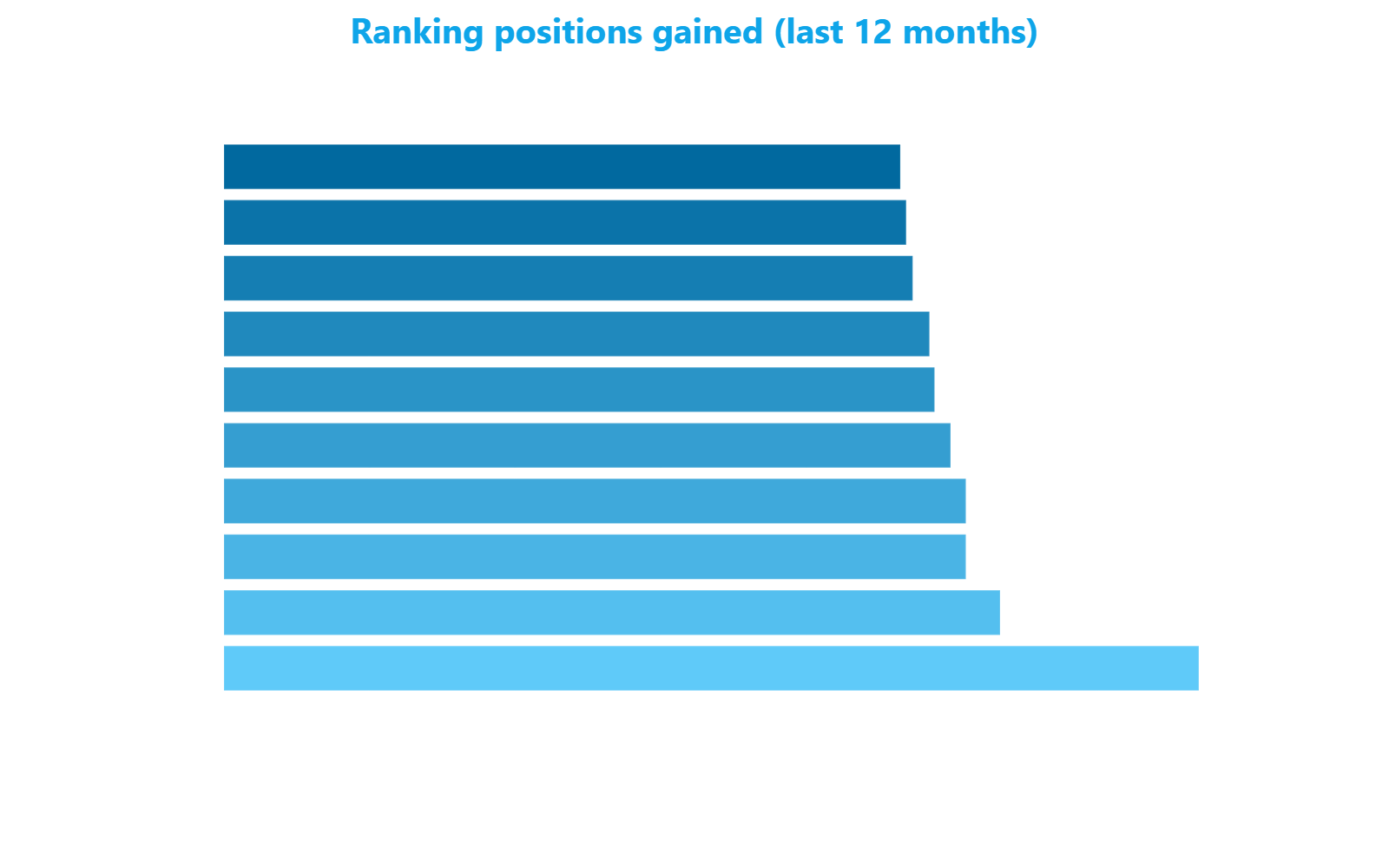
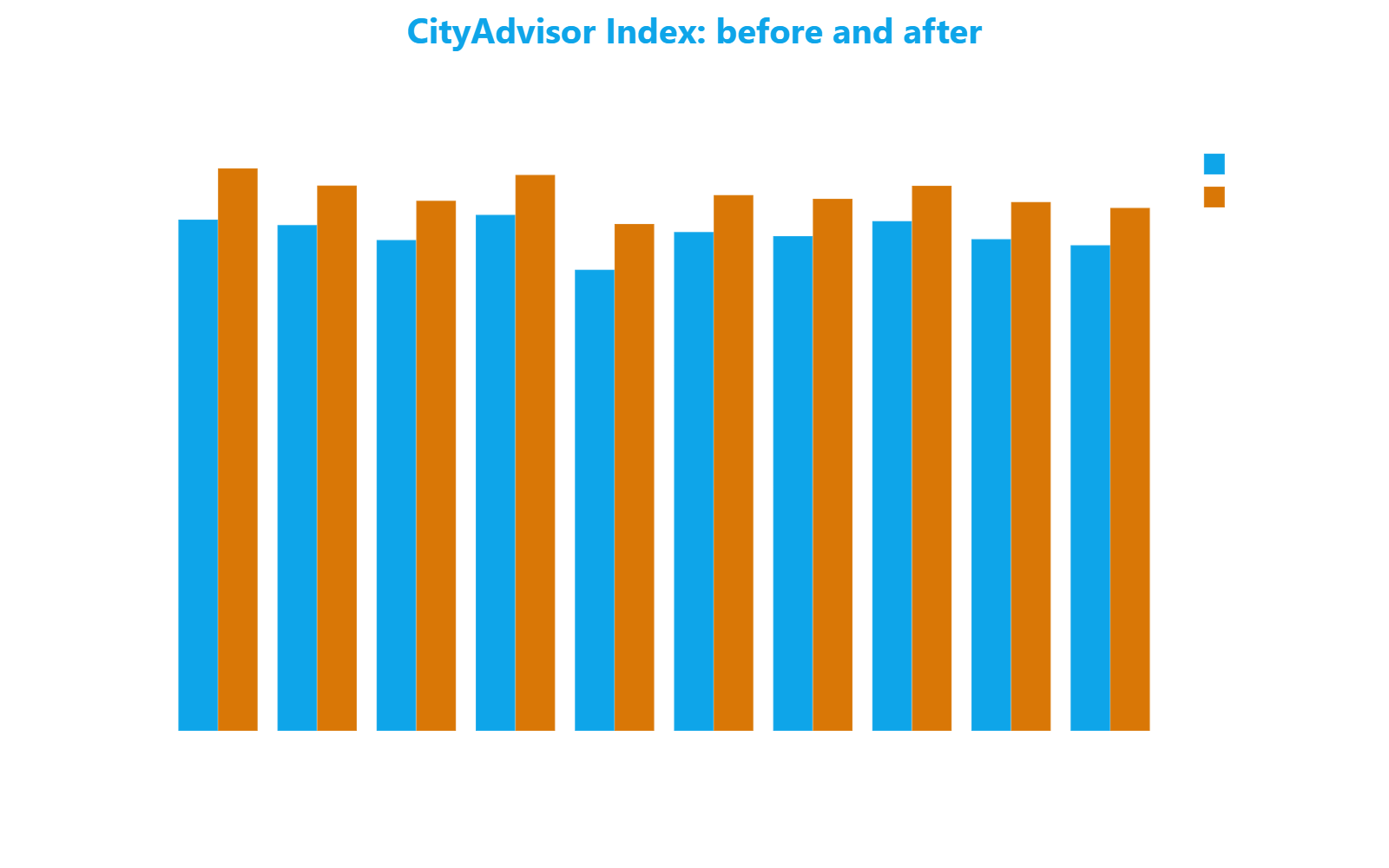
CityAdvisor Index across 4,006 streets: the biggest climbers between March 2025 and March 2026
In twelve months, Via Torrazza climbed 1,339 positions in Milan's overall Street Ranking. It sat at 2,127th place a year ago; today it ranks 788th — a leap from the lower half of the table into the top quartile. It is not an isolated case. The ten streets that gained the most positions on the CityAdvisor Index — a weighted average of ten macro indicators spanning Real Estate Value, Safety, Urban Development, Urban Livability, Attractiveness, Transport, Retail Offering, Profitability, Social Infrastructure and Demographics — reveal a distributed transformation, touching outer neighbourhoods and the semi-centre with unexpected intensity. The analysis covers 4,006 streets tracked across 105 metrics with a monthly time series going back to January 2020.
Gallaratese: three streets out of ten
The most striking pattern is geographic: three of the ten streets belong to Gallaratese. Via Torrazza leads the group, jumping from 42.00 to 46.19 points — a 4.2-point increase that places it more than three points above the city median of 42.87. Via Francesco Antonio Muttoni records the second-largest point gain after Via Torrazza (+3.8 points), but started lower — at 37.88, nearly five points below the median — and remains in the bottom half of the ranking despite gaining 998 positions. Via Armando Picchi closes the top ten with +929 positions and a score of 42.96, essentially in line with the median. A neighbourhood moving on multiple streets at once signals an area-wide shift, not an isolated event.
Tre Castelli - Faenza: the compact cluster
Three streets also come from Tre Castelli - Faenza: Via Ernesto Rossi (+976 positions), Via Guglielmo Guintellino (+969) and Via Privata Michele Faraday (+946). Their final scores are close — 44.01, 43.70 and 44.77 points — all above the city median. The three streets share a moderate absolute gain (between 2.9 and 3.1 points) yet enough to reposition them in the upper-mid tier of the ranking. Uniform improvement across adjacent streets is consistent with regeneration dynamics operating at block scale, not at the level of a single address.
The outliers: Barona, Argonne, Città Studi, Navigli
Outside the clusters, four streets rise from different neighbourhoods. Viale Giulio Richard, in Barona, gained 1,066 positions, jumping from 41.54 to 44.79 points — nearly two points above the median. Piazza San Gerolamo, in the Argonne - Corsica area, and Via San Benigno in Città Studi share the same ranking delta (+1,019) but start from different levels: San Benigno reaches 45.67 points, nearly three points above the median; Piazza San Gerolamo stops at 43.54, just above it. Via Privata Gaspare Bugatti, in the Navigli - Darsena area, closes at +937 positions and 43.43 points — placing it slightly above the city's median value.
Why do streets in different neighbourhoods improve in the same period?
Simultaneous improvement in distant neighbourhoods — Barona, Argonne, Città Studi, Navigli — suggests that the dynamics are not driven by a single localised intervention. The CityAdvisor Index moves sharply only when multiple macro indicators advance together: Real Estate Value, Retail Offering, Safety and infrastructure must converge for a street to gain hundreds of positions.
The pattern
The CityAdvisor Index has a compact distribution: variation across the 4,006 streets is narrow, and shifts of 3-4 points produce jumps of hundreds of ranking positions. The city-wide median delta over the past year is -9 positions — the ten leading streets gained between 929 and 1,339 positions, an order of magnitude beyond the typical movement. None of these streets started near the top: all sat in the lower half of the ranking twelve months ago. Simultaneous improvement across multiple macro indicators — a necessary condition for the composite index to move this sharply — points to transformations that affect not a single dimension but the overall profile of the street.
How much does a street need to move to climb Milan's ranking?
In a compact distribution like the CityAdvisor Index across 4,006 streets, a gain of just 3-4 points is enough to climb hundreds of positions. The annual median delta is -9 positions: streets that rise by more than 900 places are moving at roughly one hundred times the city's typical pace.
Methodology: ranking change across 4,006 streets between March 2025 and March 2026 (12 months). The CityAdvisor Index is a weighted average of 10 macro indicators (Real Estate Value, Safety, Urban Development, Urban Livability, Attractiveness, Transport, Retail Offering, Profitability, Social Infrastructure, Demographics), built by cross-referencing public and proprietary data sources — including real-estate listing portals, geospatial surveys of commercial activity, vehicular traffic measurements, municipal registry data and a proprietary multi-source model for property valuations. The ranking measures relative position: a rise indicates improvement relative to other streets. Coverage: 4,006 streets, 105 metrics, monthly time series from January 2020.
Frequently Asked Questions
Which street gained the most positions in Milan over the past year?
Via Torrazza, in the Gallaratese neighbourhood, gained 1,339 positions in the CityAdvisor Index ranking between March 2025 and March 2026, moving from 2,127th to 788th place out of 4,006 monitored streets. Its score rose from 42.00 to 46.19 points, more than three points above the city median of 42.87.
Which Milan neighbourhoods improved the most in 2025-2026?
Gallaratese and Tre Castelli - Faenza are the neighbourhoods with the most streets in the top-ten improvers list, with three streets each. Individual fast-rising streets also appear in Barona, Argonne - Corsica, Città Studi and the Navigli - Darsena area, signalling a distributed transformation across multiple parts of the city.
What is the CityAdvisor Index and how does it work?
The CityAdvisor Index is a weighted average of ten macro indicators — Real Estate Value, Safety, Urban Development, Urban Livability, Attractiveness, Transport, Retail Offering, Profitability, Social Infrastructure and Demographics — calculated for 4,006 Milan streets using 105 metrics with a monthly time series from January 2020.
What does it mean that the index distribution is compact?
It means the score gap between streets is narrow: most cluster within a tight range around the 42.87-point median. As a result, gains of just 3-4 points are enough to produce jumps of hundreds of ranking positions, while the city's annual median delta is only -9 positions.