Milan, short-term rental rates and property prices: a correlation that does not exist
An analysis of 4,006 streets reveals that the apparent link between tourist rental rates and real estate values is almost entirely a geographic effect
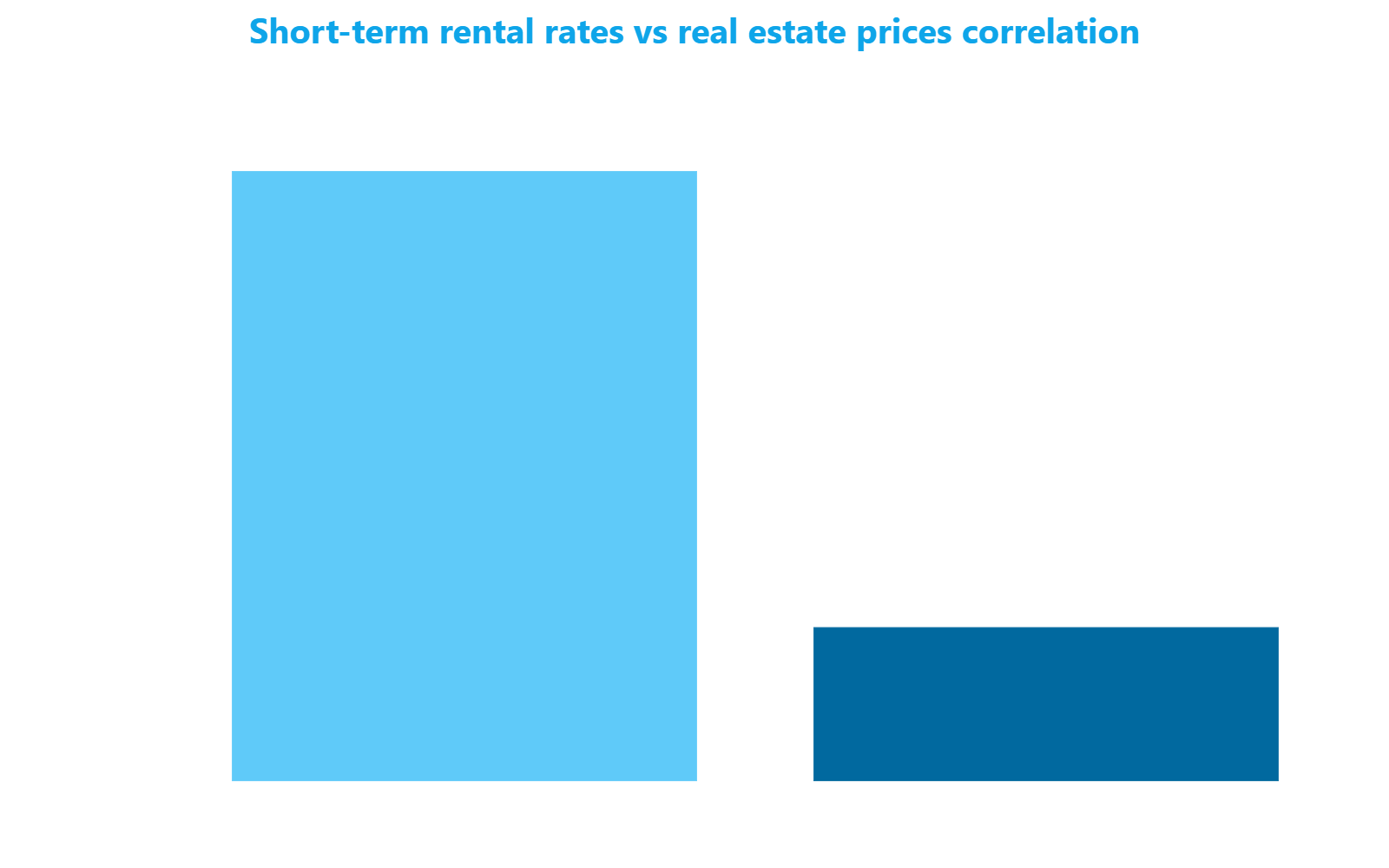
The correlation between short-term rental rates and real estate prices in Milan stands at 0.95 — a figure that would suggest an almost perfect link. It is a mirage. When streets in the same area are compared, that link drops by 75%, shrinking to a marginal effect. The tourist market does not move in lockstep with the residential one: the city center simply costs more for everything. The analysis, covering 4,006 streets with cross-referenced data from independent sources, dismantles one of the most widespread beliefs among investors and operators in Milan's property market.
The gradient that explains (almost) everything
The investigation measured the average nightly rate for short-term rentals and the price per sqm on each of Milan's 4,006 streets. At the raw level, the two signals move together with a strength nearly unmatched in the platform's metrics panel. The center has high rates and high prices; the periphery has both low. The r=0.95 correlation is the mechanical reflection of this map.
What happens when the location effect is removed?
The decisive test is different: what happens when each street is compared with its geographic neighbors, stripping out the effect of location? The correlation drops to 0.24 — a value that explains roughly 6% of the variance. In practical terms: a street with short-term rental rates above its neighbors does not systematically have real estate prices above its neighbors. The two markets, within the same area, respond to different forces.
Three profiles, one map
The 4,006 streets fall into three groups that remain stable over time, identified through clustering analysis on spatial residuals.
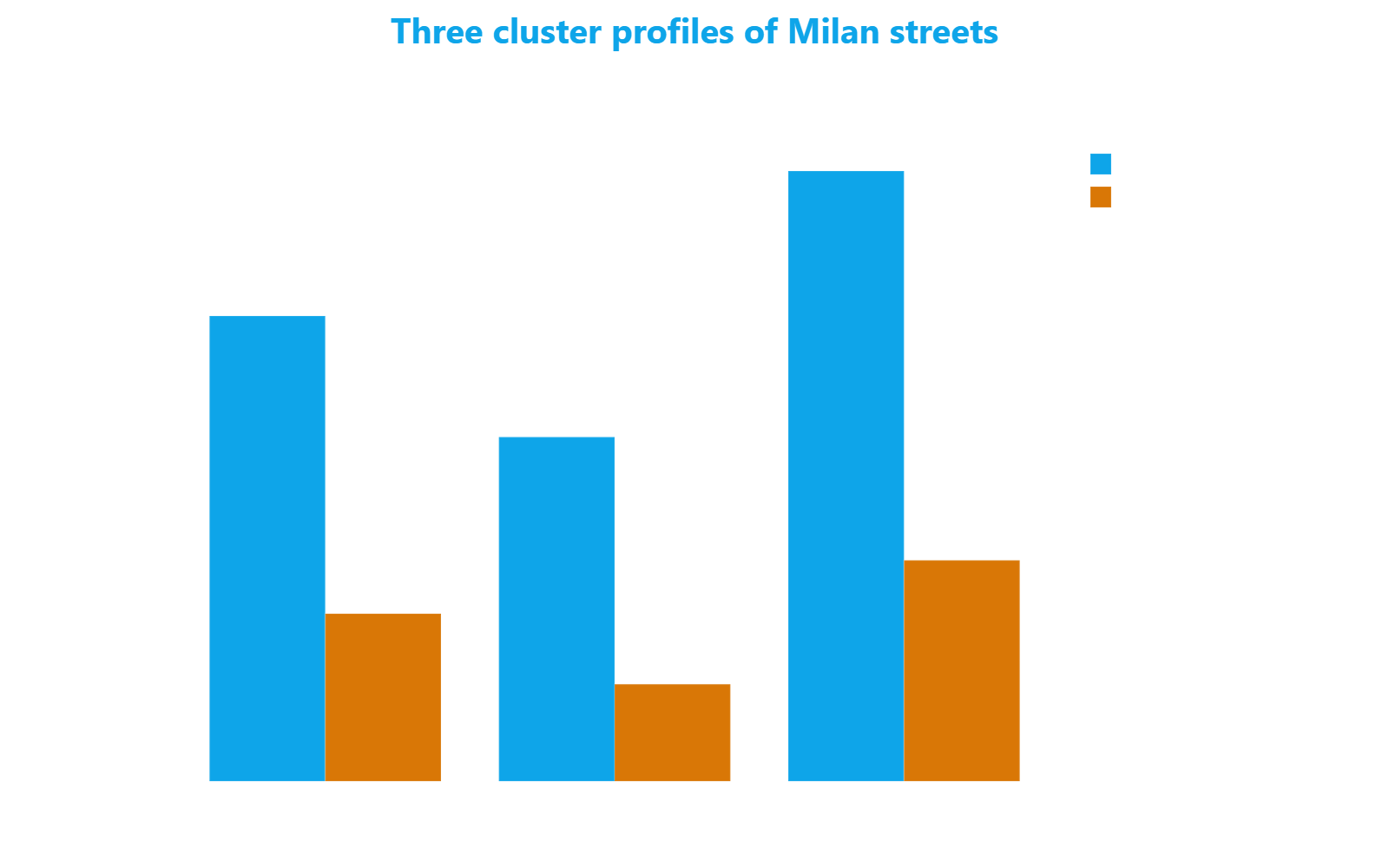
The first group gathers 3,018 streets — 75% of the city — and represents the Milan baseline: an average rate of EUR 143 per night (just below the city median of EUR 154), a price of EUR 4,037 per sqm (above the median of EUR 3,629). These streets sit at neutral positioning relative to their neighbors on both signals. This is the ordinary fabric of the city, stable in 93% of cases from one year to the next.
The second group comprises 587 streets that outperform their neighbors on both fronts: EUR 254 per night — 65% above the city median — and EUR 9,209 per sqm, roughly 2.5 times the median. Via Fatebenefratelli, Corso Italia, Via dell'Annunciata, Via Lanzone: iconic central streets where both the tourist and residential markets express values above the immediate context. 80% of these streets maintain the profile over time.
Which streets underperform despite being in premium areas?
The third group, 401 streets, is the most interesting from an analytical standpoint. These are streets in premium areas — EUR 194 per night, EUR 6,977 per sqm, both above the city's 75th percentile — that nonetheless underperform their neighbors on both signals. Secondary streets in prestigious neighborhoods, where the area's value is not fully reflected in either tourist rates or purchase prices. The stability of this group is low (44.6%): many of these streets oscillate between periods, signaling volatile relative positioning.
Two markets, one geography
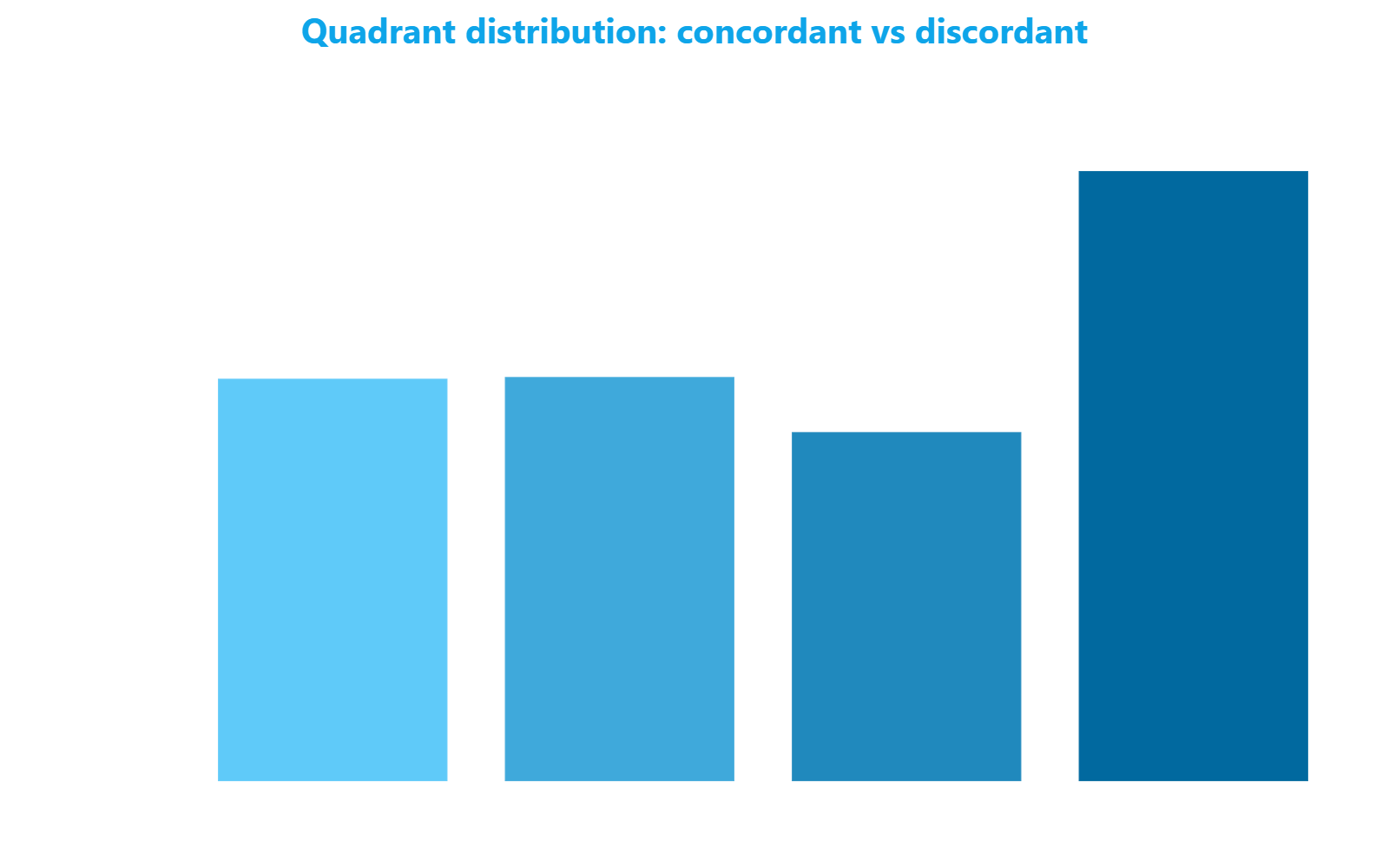
The most telling finding comes from the quadrant distribution. If the relationship between rates and prices were genuine, the vast majority of streets should fall in concordant quadrants: rate above neighbors and price above neighbors, or both below. Instead, the discordant quadrants account for 42.7% of streets — nearly half.
Specifically, 917 streets show a short-term rental rate above the local norm but a real estate price below it. A profile incompatible with a genuine relationship between the two signals, and perfectly consistent with the idea that tourist demand and the residential market respond to different factors even within the same area.
Can the nightly rate be used as a proxy for Real Estate Value?
No. The distinction is operational: anyone assessing an area cannot use the short-term rental rate as a proxy for Real Estate Value, nor the price per sqm as an indicator of tourist Profitability. The two signals share the map, not the logic. In the 917 streets where the two markets diverge — high rate, contained price relative to neighbors — the data suggest local dynamics to be investigated case by case, where tourist demand intercepts characteristics (proximity to attractions, perceived Livability, accommodation type) that the residential market does not reward in the same way.
Methodology: the analysis cross-referenced the average nightly short-term rental rate (weighted average by accommodation type, from short-term rental data) with the price per sqm (proprietary multi-source model: institutional valuations, recent transactions, asking prices from real estate listing portals) across 4,006 streets in Milan. To isolate the effect of geographic position, each street was compared with nearby streets, calculating spatial residuals at three neighborhood levels. The raw correlation (r=0.95) dropped to r=0.24 after this adjustment, a 75% reduction confirmed unanimously across all three neighborhood levels and consistent between parametric and non-parametric methods. The three-cluster structure proved stable over time (stability index 0.80).
Frequently Asked Questions
What is the real correlation between short-term rental rates and real estate prices in Milan?
The raw correlation is 0.95, but this figure is misleading. After removing the effect of geographic position — comparing each street with its neighbors — the value drops to 0.24, explaining just 6% of the variance. The apparent link is almost entirely a center-periphery gradient effect: the center costs more for both short-term rentals and property, without the two markets genuinely influencing each other.
How many streets in Milan have high tourist rates but low real estate prices?
Out of 4,006 streets analyzed, 917 — nearly one in four — show a short-term rental rate above the local average but a real estate price below their neighbors. This discordant profile demonstrates that tourist demand and the residential market respond to different forces even within the same area of Milan.
Which streets in Milan have both short-term rental rates and real estate prices above their neighbors?
The group includes 587 streets, among them Via Fatebenefratelli, Corso Italia, Via dell'Annunciata, and Via Lanzone. These central streets have an average rate of EUR 254 per night and a price of EUR 9,209 per sqm, outperforming their neighbors on both fronts. 80% of these streets maintain the profile over time.
Are there streets in premium areas that underperform their neighbors?
Yes, 401 streets are located in premium areas — with values above the city's 75th percentile — yet underperform their neighbors in both tourist rates and real estate prices. These are typically secondary streets in prestigious neighborhoods, with low positioning stability (44.6%), making them subject to oscillations from one period to the next.